
Yoga for Sciatica: Discover Safe Poses and Smart Limits to Relieve Pain
Practicing yoga for sciatica can feel like an effective way to manage that electric sensation running from your lower back pain down into your butt, leg, or even foot.
When that nerve gets irritated, a deep stretch may sound helpful, but pushing hard can often make things worse.
Done gently, yoga for sciatica may reduce pressure, improve mobility, and calm tight muscles around the hips and lower back.
The goal is comfort and control, rather than achieving a deeper stretch that might aggravate your sciatic nerve pain.
If pain spikes, spreads, or turns sharp, stop and reset immediately.
That starts with knowing what sciatica is, and why some movements help while others sting.
If you would rather start with a gentle follow-along routine, this video is a solid option:
Key Points
- Prioritize Gentleness: Sciatica management through yoga relies on calm, controlled movement rather than deep stretching, which can further aggravate irritated nerves.
- Listen to Your Body: If you experience sharp pain, numbness, or symptoms spreading further down your leg, stop the pose immediately and reset.
- Use Props for Support: Using pillows, blankets, or blocks helps maintain proper spinal alignment and allows muscles to relax, preventing overexertion that often triggers flares.
- Consistency Over Intensity: Small, frequent, and easy sessions are significantly more effective for long-term recovery than high-intensity efforts aimed at increasing range of motion.
What sciatica is and why it can flare up during movement
Sciatica is a symptom, not a disease. It usually means the sciatic nerve, or one of the nerve roots that feed it, is irritated or compressed.
Common causes of this nerve compression include a herniated disc, spinal stenosis, bone spurs, and piriformis syndrome, which occurs when a tight piriformis muscle in the buttock irritates the sciatic nerve.
Long periods of sitting can exacerbate the problem because the hips stiffen and the lower back remains under load.
Common signs that point to sciatica
Pain often shows up on one side. It may present as a shooting pain or a dull ache, and it can travel from the lower back into the butt, thigh, calf, or toes.
Some people notice a tingling sensation or numbness more than pain. Others feel weakness when they stand, walk, or climb stairs.
Symptoms can also shift during the day.
A mild ache in the morning may turn into leg pain after a long drive or hours at a desk.
Why some movements feel good, and others make pain worse
Gentle motion can help by improving blood flow and easing muscle guarding.
However, deep forward bends, hard twists, and long aggressive holds may pull on irritated tissue or compress the lower back, potentially worsening lower back pain.
A guide to safe sciatica yoga poses makes the same point: calm movement usually works better than chasing a big range of motion when the nerve is irritated.
| Pose Name | Description | Benefits |
|---|---|---|
| Child’s Pose (Balasana) | Gently stretches the lower back and hips, promoting relaxation. | Helps relieve tension and calming effect. |
| Downward-Facing Dog (Adho Mukha Svanasana) | Strengthens the body while providing a stretch for the spine. | Improves blood circulation and relieves stress. |
| Half Moon Pose (Ardha Chandrasana) | Enhances balance and flexibility, encouraging a gentle twist of the spine. | Promotes spinal health and improves core strength. |
| Cobra Pose (Bhujangasana) | Opens the chest and strengthens the lower back, aiding in spinal alignment. | Counters slouching and improves posture. |
| Locust Pose (Salabhasana) | Strengthens the back and stretches the hips, targeting affected areas. | Enhances back strength and flexibility. |
| Knees-to-Chest Pose (Pawanmuktasana) | Relieves tension in the lower back and helps to relax the spine. | Promotes relaxation and helps reduce pain. |
| Reclined Pigeon Pose (Supta Kapotasana) | Stretches the hips and glutes, reducing pressure on the sciatic nerve. | Alleviates tension in the hip region. |
| Bridge Pose (Setu Bandha Sarvangasana) | Promotes spinal alignment and stretches the front of the body, relieving tension. | Supports lower back and improves posture. |
| Legs-Up-the-Wall Pose (Viparita Karani) | Restorative position that allows the body to relax while promoting circulation in the legs. | Reduces fatigue and enhances relaxation. |
Yoga for sciatica: expert tips to stay safe while you practice
The safest way to practice is to stay one step below your limit.
Move slowly, hold briefly, and keep breathing steady.
A mild stretch can be fine, but sharp pain, increasing numbness, or symptoms that move farther down the leg are warning signs.
Pain that travels farther down the leg is a stop sign.
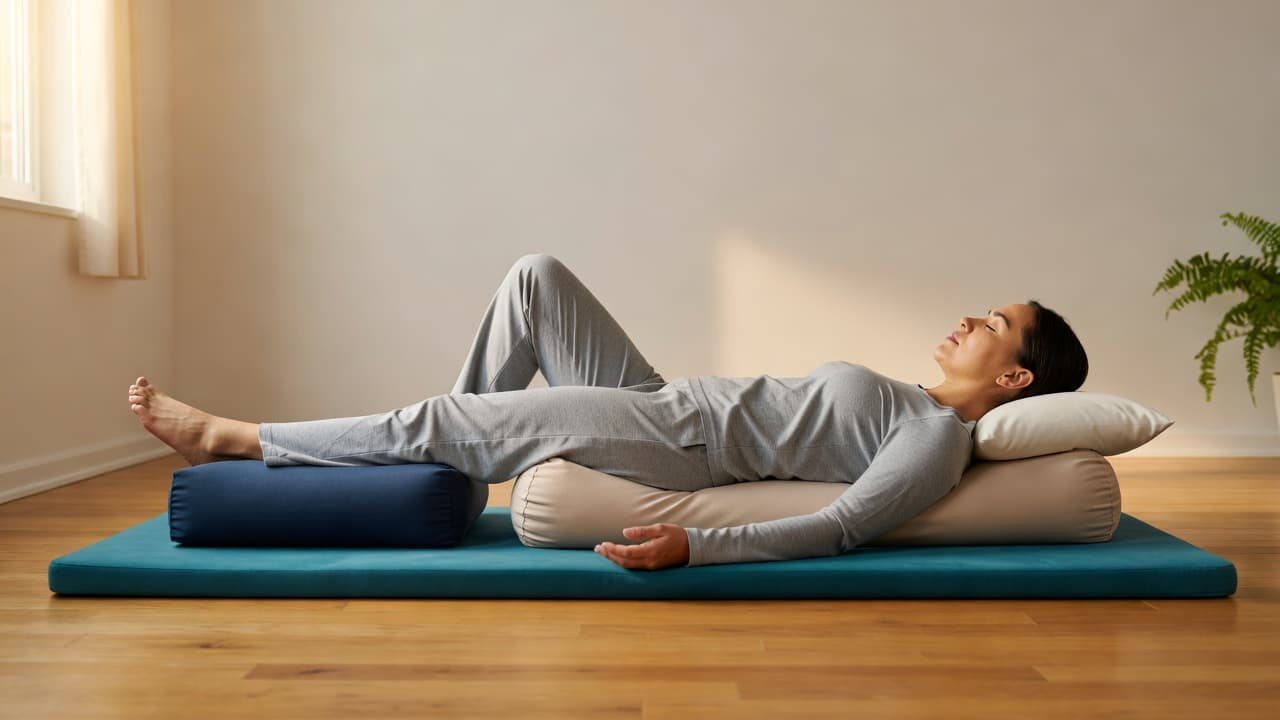
Start with gentle yoga poses
Begin on the floor or against a wall, where balance is not an issue.
Incorporating gentle yoga poses allows you to focus on your recovery without overexertion. Props are essential here because they help your muscles relax rather than brace.
Using blankets, pillows, or blocks helps maintain proper spinal alignment and effectively reduces muscle tension, making a sensitive practice feel much safer.
If you need ideas, using yoga props for back pain relief can provide a solid foundation.
Avoid pushing into pain or forcing flexibility
More stretch is not better here.
Back off when a pose feels pinchy, shaky, or sharp. If tingling increases or pain shoots farther down, stop the movement right away.
Match the pose to how your body feels that day
Sciatica can change from morning to evening.
On flare-up days, keep your practice short and simple.
On better days, you can add a few more repetitions, but the pace should always remain easy and controlled.
The best yoga poses for sciatica relief
No single pose works for everyone, as sciatica has different causes.
The most effective approach for sciatica relief is a balanced routine of stretching and strengthening.
By gently mobilizing the spine and stabilizing the surrounding muscles, you can ease tension on the sciatic nerve.
Knees-to-chest to ease the lower back
Lie on your back and draw one knee in, then both if that feels comfortable. Hold lightly and breathe.
This can calm the lower back, but avoid pulling hard or forcing your spine flat against the floor.
Cat-cow to loosen a stiff spine
Move between a rounded back and a gentle arch on your hands and knees.
Keep the movement smooth and small; a subtle flow often feels better than a dramatic curve.
Bridge pose to support the hips and glutes
With knees bent and feet grounded, lift your hips only a few inches. Focus the effort on your glutes and hamstrings rather than creating a hard arch in your lower back. Stronger hips help take the strain off your lumbar area.
Hamstring stretch to reduce leg tension
Rest your heel on a low step or chair.
Keep your spine long and hinge forward only slightly.
Because tight hamstrings can add stress to the pelvis and lower back, a light stretch is often enough.
Cobra pose and sphinx pose for gentle strength
These poses help build core control.
Keep the cobra pose low, with your elbows bent and your chest lifting only to a comfortable height.
If Cobra feels too intense, try the Sphinx pose, which keeps your forearms on the floor and provides a gentler extension.
Note that if any of these create a pinching sensation in your back, you should skip them immediately.
Pigeon pose and reclined pigeon pose
Pigeon pose is a classic for opening the hips, which can indirectly help relieve sciatic pressure. However, it can be demanding.
For many people, the reclined pigeon pose is a much safer option because it protects the lumbar spine by keeping the back fully supported against the floor.
When to expand your routine
If your sciatic nerve is not currently experiencing an acute flare-up, you might consider adding child’s pose to gently release the back, downward-facing dog to stretch the entire posterior chain, or legs-up-the-wall pose to promote relaxation and recovery.
Always listen to your body and move with caution.
A review of yoga poses for sciatica pain relief highlights that while these movements are popular, your personal comfort is the most important indicator of whether a pose is right for you.
When to stop yoga and get medical advice
Yoga is a powerful tool for wellness, but it cannot address every underlying cause of sciatic pain. If your symptoms worsen during or after a session, avoid the temptation to push through the discomfort.
If daily activities like walking or sitting become increasingly difficult over time, it is important to seek professional guidance rather than waiting for the issue to resolve on its own.
Signs a pose is not right for your body
If you experience any of the following during your practice, stop immediately and choose a more restorative movement:
- Sharp or stabbing pain that deviates from your usual discomfort.
- A noticeable increase in weakness in the affected leg.
- New or intensifying tingling sensations.
- Pain that radiates further down the leg, indicating increased irritation of the sciatic nerve.
- Feelings of instability or the inability to maintain steady, rhythmic breathing.
When a doctor or physical therapist can help
Seek immediate medical attention if you experience a loss of bladder or bowel control, significant muscle weakness, or numbness in the groin area, as these can be signs of a more severe nerve complication.
For long-term management, a doctor or a physical therapist can help you develop a personalized plan to address chronic back pain.
These professionals can rule out other underlying conditions and guide you toward safer, more effective movements tailored to your specific physical needs.
Frequently Asked Questions
Can yoga actually cure sciatica?
Yoga is an effective tool for managing symptoms, improving mobility, and calming tight muscles, but it may not address the underlying medical cause of your nerve irritation. It works best as part of a broader recovery plan rather than a standalone cure for every source of pain.
How do I know if a pose is making my sciatica worse?
Pay close attention to sensations of sharp or shooting pain, increased numbness, or symptoms that move further down your leg during or after practice. If you feel any of these, your body is signaling that the movement is too intense and you should stop immediately.
Should I avoid all forward bends when I have sciatica?
Deep, aggressive forward bends can pull on irritated nerve tissue and compress the lower back, often making the problem worse. It is generally safer to perform gentle, small-range movements and prioritize supported poses that keep your spine in a neutral position.
Can I practice yoga every day with sciatica?
Yes, a daily, gentle practice is often better than infrequent, intense sessions. On days when your pain is higher, keep your movements short and restorative, while on better days, you can slowly add more repetitions at a controlled pace.
A steady, gentle practice works best
Relief usually comes from small, repeatable sessions, not from pushing hard once. When you treat yoga for sciatica as a way to calm the body, support the hips, and move with control, it has a better chance of providing effective sciatica relief.
By prioritizing a steady and gentle approach, you allow your body the time it needs to recover.
Remember that managing chronic sciatic nerve pain requires patience, so let consistency do more than intensity to reach your goals.
Ultimately, a regular yoga routine for sciatica is the most reliable way to maintain progress and long-term comfort.





5 Comments