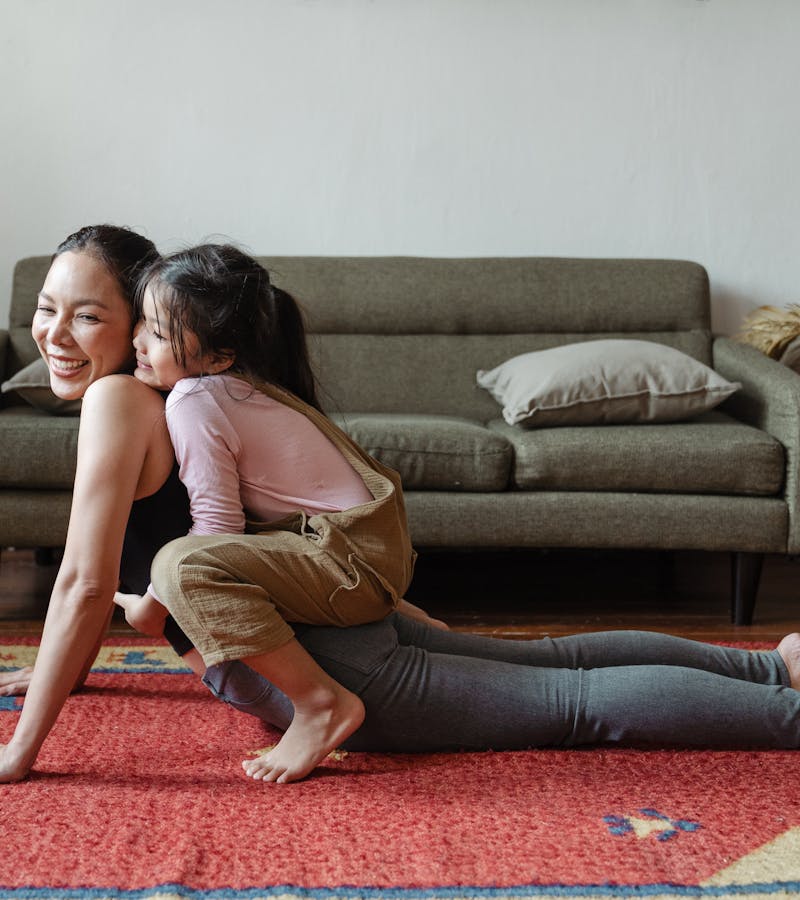
Easy Yoga Poses for Two: Strengthen Your Bond and Balance Together
The easiest date-night workout might be two mats on the floor.
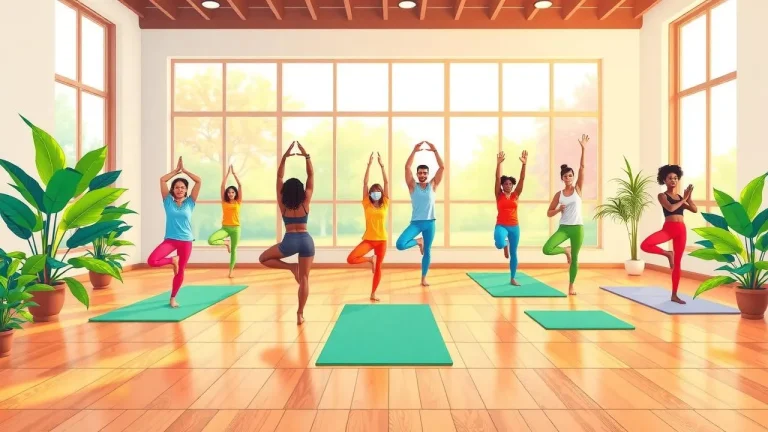
Practicing partner yoga poses gives couples and friends a relaxed way to stretch, laugh, and pay attention to each other.
These beginner yoga poses are designed for all experience levels, making them perfect for those just starting out.
By engaging in this practice, you can effectively improve your muscle strength and hamstring flexibility while fostering a sense of calm through mindful movement.
These poses are low-pressure and simple to perform.
You do not need acrobatics or elite flexibility. You need patience, clear communication, and room to wobble a little.
They also build trust, balance, and nonverbal communication without turning practice into a performance.

- Extra thick, cushy floor mat in Black for yoga, gym, and everyday exercise
- 1/2 inch thickness offers comfortable padded support and shock absorption; textured surface provides extra traction
- Durable foam construction offers stretchability and springs back into shape
- Elastic strap for secure rolled-up mat storage and easy over-the-shoulder carrying
- Wipes clean easily

Last update on 2026-10-11 / Affiliate links / Images from Amazon Product Advertising API
Key Points
- Start with seated poses so you can practice synchronized breathing and learn each other’s pace.
- Keep 3 to 4 feet of open space, enough room for setting up your yoga mat, and a few props nearby.
- Move slowly, talk often, and stop if any stretch feels sharp or forced.
- For beginners, connection matters more than depth, balance, or perfect form.
Why partner yoga poses feel so good together
Partner yoga works because it gives you something a solo practice cannot: immediate feedback from another person. That extra contact makes beginner poses feel less lonely and more playful.
What makes two-person yoga different from solo practice
Two-person yoga adds support in simple ways. A back-to-back seat can help both spines stack taller. A light hand grip can steady balance before anyone lifts a foot.
Because you feel another body nearby, you notice changes in breath, posture, and weight shifts more quickly.
Many beginner routines use gentle counterbalance, matched breathing, and light contact. One person leans back a little, the other resists a little, and both find a middle ground.
It is important to note that these entry-level moves are quite different from advanced partner yoga or acro yoga.
Those styles require significant strength and technical skill, so beginners should prioritize mastering the basics first to ensure everyone stays safe and supported.
How couples and friends benefit from practicing together
The payoff goes beyond flexibility.
Couples yoga often fosters a deeper sense of trust and communication because you have to check in, wait, and respond to your partner. Friends get the same benefit, plus the kind of shared laughter that takes the edge off a stressful day.
For many, that steady touch builds a meaningful emotional connection in a low-pressure way.
Kripalu and teacher Rachel Marie both describe partner yoga as a way to reconnect through breath, touch, and honest feedback.
Healthline has also cited research from Loyola University Health System on the relationship between yoga and intimacy. You also start reading small cues, like a shoulder lifting or a breath speeding up.
That makes partner practice useful for beginners, since the goal is comfort, not perfect form.
If you want more pose ideas and safety notes, MyYogaTeacher’s beginner partner yoga guide is a solid next read.

- Yoga Blocks are essential tools for yoga practitioners of all levels to improve the difficulty and stretching strength of various parts of the body. They help adjust posture, assisting the body in achieving certain movements with more precision and ease
- Made from EVA rubber products, these yoga blocks are water-resistant, featuring a closed cell structure that makes non-water absorption and excellent moisture resistance
- This yoga bricks is designed for convenience, being lightweight and compact, making it suitable for carrying to various occasions such as lounges, outdoor activities, home yoga, and stretching exercises
- The surface of these yoga blocks is smooth and non-porous, repelling dirt and dust. Should any dirt accumulate, it can be easily removed with a damp towel, saving you the hassle of thorough cleaning
- They possess good shock resistance and cushioning performance, providing a stable and comfortable foundation for your yoga practice
Last update on 2026-10-11 / Affiliate links / Images from Amazon Product Advertising API
How to set up for easy partner yoga poses
Before you try yoga poses for two people, set up the room so neither of you has to worry about furniture or footing.
Two mats, a clear floor, and a short warm-up make a big difference.
 Simple safety rules before you start
Give yourselves about 3 to 4 feet of space, and spend 5 to 10 minutes warming up. A few cat-cow stretch sequences, shoulder rolls, and easy forward folds are enough.
Following these safety tips, agree on one rule before every pose: either person can stop at any time.
Move into each shape slowly, especially when weight shifts are involved. Keep bends and twists mild at first. Match effort levels as closely as you can, because one person pushing much deeper than the other usually makes the pose feel unstable.
If one partner is taller or stronger, choose the version that feels safe for the less flexible person.
Use eye contact as a vital tool for trust and communication throughout your practice. It helps you stay in sync and aware of how your partner is feeling.
If either person feels sharp pain, stop and reset.
Talking matters more than flexibility. A simple “too much,” “hold there,” or “I feel steady” keeps both people safer.
Small props and easy tweaks that help
Props can turn a frustrating pose into an easy one. Using yoga blocks under the hands reduces strain in forward folds, while a folded blanket under the knees makes seated work more comfortable.
Ensure you are both grounded on a supportive yoga mat, and use a strap if your arms don’t quite reach without hunching the shoulders.
Small changes help more than most beginners expect.
Bend the knees if hamstrings feel tight. Keep hands on shins instead of reaching for feet.
If you’re working on yoga poses to improve flexibility, these simple adjustments help you stay relaxed long enough to get the most benefit.
Beginner Partner Yoga Poses to Try First
Start with the calmest shapes first.
Once breath and timing feel natural, the stronger poses feel much easier.
Seated back-to-back breathing
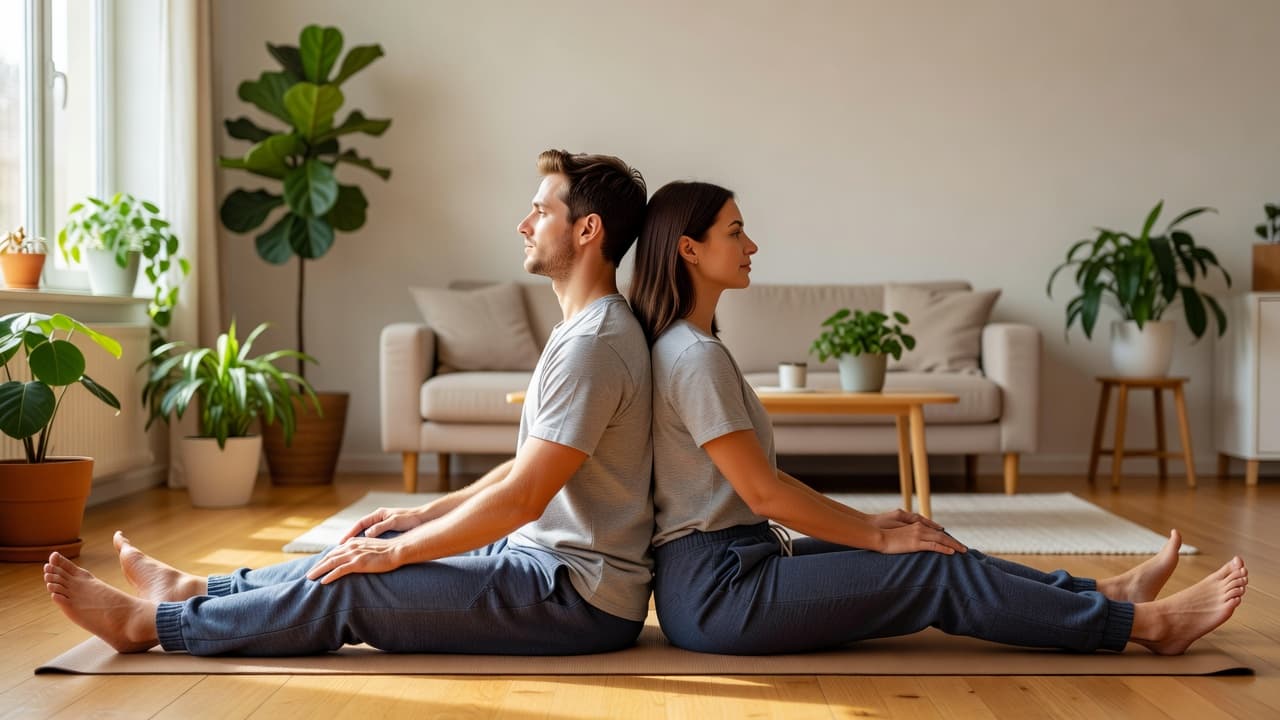
Sit cross-legged or on cushions with your backs touching. Rest your hands on your knees and close your eyes if that feels comfortable.
Then breathe normally for 3 to 5 rounds, and notice your partner’s rib cage expand against yours.
This pose is simple, but it sets the tone for everything else. You both slow down, stack the spine, and settle your nerves.
If one person sits higher on a blanket, the contact between their backs will feel more even.
Partner seated twist
Stay back-to-back, and cross your legs in a comfortable seat. On an inhale, lengthen through the crown of the head.
On an exhale, turn gently to the right while your partner turns left. Each person can place one hand on the opposite knee and the other on the partner’s outer thigh or knee for light support.
Hold for 3 to 5 breaths, then switch sides. The seated twist should feel clean and easy, never forced.
Because you are moving in opposite directions, this pose teaches control and helps both of you slow your pace. It also gives the spine a gentle wake-up.
Partner forward fold
Sit facing each other with legs extended and the soles of your feet lightly touching. One person folds forward while the other sits tall and holds the partner’s hands or wrists.
After a few breaths, switch roles.
Keep the pull light. Your partner is there to guide the stretch, not deepen it by force. Bent knees are completely fine, and for many beginners, they feel better on the back and hamstrings.
If you want another simple option after this one, 6 partner yoga moves anyone can do include a few easy variations.
Double boat pose
Sit facing each other with knees bent and toes touching.
Hold hands, lean back a little, and lift one foot at a time until the soles meet.
If that feels steady, both people can slowly extend their legs upward.
You will feel this pose in the core right away, as it is a fantastic way to build core strength. Keep the chest lifted, and don’t worry if the shape lasts only a breath or two at first.
Wobbly balance is part of the fun, so laugh, reset, and try again.
Back-to-back chair pose
Stand back-to-back with feet about hip-width apart, then walk your feet forward a little. Lean gently into each other and bend the knees as if you are sitting into an invisible chair.
Keep your weight in the heels, your chest lifted, and your knees tracking in line with the feet.
Hold for about 10 seconds, or a few slow breaths, then press back up together.
This pose builds leg strength and teamwork fast. If either person’s knees feel pinchy, come up higher instead of sinking lower.
Partner Child’s Pose
For a relaxing transition, have one partner move into Child’s Pose with their forehead resting on the floor. The second partner gently lays their back against the first person’s back, allowing their own spine to arch and release.
This resting stretch provides a sense of connection while helping both of you recover from more active movements.
Double tree pose
Stand side by side, with your arms around each other’s waists. Shift your weight onto your inside legs and lift your outside feet to rest against your calves or inner thighs.
Reach your outside arms overhead, either joined together or held separately. This pose is wonderful for improving your balance and focus.
Partner plank
Start in a standard high plank position facing each other. Reach out to hold your partner’s opposite wrists or forearms for stability.
While maintaining a strong, straight line from your head to your heels, you will both feel your core activate. This variation is an excellent way to build muscle strength while relying on your partner for extra support and motivation.

- Relax Your Body:The Stretch strap & leg stretcher is perfect for Physical therapy is perfect for stretch foot,waist and hand.Assist stretching after exercise,relieve muscle soreness,improve muscle flexibility,and also improve back pain caused by lack of exercise for a long time.
- High Quality and Durable: The yoga strap made of non-elastic premium nylon,and ensures optimal resistance and great stability, not easy to broken, high strength and toughness. Providing you relax stretching experience.
- Light and Easy to Use: Stretching Strap have 10 loops rope with comfy texture. 75 inch long and 1 inch wide enough to recommended the most beginner to use it, yoga stretches are so easy to work with it even if you’ve never done them.
- Multi Function: This stretching equipment is very suitable for yoga, pilates, daily exercise or physical therapy, Oak-Sports stretch band can also be used for physical therapy equipment and postoperative recovery.
- Exclusive Service: Oak-Sports are willing to provide you a safe and high quality yoga stretching strap, our worry-free 12 month, and friendly customer service.
Last update on 2026-10-11 / Affiliate links / Images from Amazon Product Advertising API
How to make each of these partner yoga poses feel better
Beginners don’t need to copy a photo exactly. A small adjustment often turns a shaky pose into one you both want to repeat.
Easy adjustments for tight hips, hamstrings, or wrists
Tight hips and hamstrings usually show up first in seated folds and twists. Bend the knees, sit on a folded blanket, or widen the legs a little so the pelvis can tip forward more easily.
Improving your hamstring flexibility is a great way to make these folds more comfortable. For wrists, keep the hands lower, use blocks, or avoid locking the elbows.
Range of motion comes with time. If you want solo work between partner sessions, these best yoga poses for flexibility can help loosen the hips, back, and hamstrings without rushing the process.
When balance feels awkward
When balance feels messy, slow the whole pose down. Say the next step out loud before either person shifts weight.
You can also practice beside a wall, or return to seated poses until timing feels smoother.
Most pairs improve quickly once they stop trying to rush the harder version. Shared breathing helps, and so does keeping the hold short. Three calm breaths with good contact beat 20 seconds of panic every time.
By mastering these foundational movements now, you are better prepared to safely attempt more advanced yoga poses later on.

- Designed with anti-slip stripes and a fine frosted texture for enhanced grip and stability. The increased surface friction ensures safe contact with both the floor and your body, keeping every movement controlled and confident.
- Engineered to safely hold up to 330 lbs (150 kg) without losing shape. The burst-resistant structure with slow air release provides reliable performance and extra safety during all types of workouts.
- Ideal for yoga, Pilates, balance and flexibility training, and core workouts. Also doubles as an active sitting solution to improve posture and relieve back discomfort from long office hours.
- Comes with a quick-inflation pump (hand pump for 45/55/65 cm, foot pump for 75/85 cm), two air stoppers, and clear instructions. Available in five sizes to fit different body types and workout goals.
Last update on 2026-10-11 / Affiliate links / Images from Amazon Product Advertising API
Frequently Asked Questions
Do we need prior experience to try partner yoga?
Not at all. These beginner-friendly poses are designed for all levels and focus on connection rather than advanced flexibility or complex movements. You only need a bit of patience and a willingness to communicate with your partner.
Is partner yoga safe for everyone?
Yes, as long as you follow basic safety rules like moving slowly, staying within your range of motion, and stopping if you feel sharp pain. Always prioritize comfort over the depth of a stretch, and feel free to use props like blocks or blankets to provide extra support.
Can we do these poses if we have different fitness levels?
Absolutely. The key is to align your effort levels and communicate clearly about what feels sustainable for both of you. If one partner is much taller or stronger, focus on the version of the pose that feels safe and balanced for the less-flexible partner.
How long should a partner yoga session last?
For beginners, a session can be as short as 10 to 15 minutes. It is better to practice a few poses with calm, synchronized breathing than to rush through a long routine. Focus on the quality of your connection and the steadiness of your movements rather than the duration.
Start with one pose and build from there
Easy partner yoga poses work because they keep movement personal.
Couples can build trust and closeness, while friends can stretch, laugh, and practice better communication without much setup.
Start with one or two seated poses, keep talking, and hold each shape for only a few breaths. As your timing improves, your confidence will too.
The best partner yoga session is usually simple, comfortable, and leaves both people wanting to do it again, ultimately strengthening the foundation of trust and communication in your relationship.


3 Comments