Yoga Ball Exercises for Beginners
Yoga ball exercises are a fantastic way for beginners to ease into fitness while having fun. One great start is the 30-minute sit, where you simply balance on the ball and engage your core, begin with 10 minutes and build up! Next, try ball marching by lifting your heels alternately; it really gets those muscles working. The wall-assisted squat helps develop strength as you press against the wall with the ball behind you. Don’t miss out on dynamic sit-ups or bird dogs for core stability. With these simple exercises, you’ll build strength, improve balance, and enjoy every moment of your workout routine!
Table of Contents
- Getting Started with Yoga Ball Exercises
- 30-Minute Sit for Core Stability
- Engaging Your Core with Ball Marching
- Mastering the Wall-Assisted Ball Squat
- Effective Ball Sit-Ups for Beginners
- Strengthening Legs with Ball Leg Lifts
- Building Strength with Hip Bridges
- Planking with a Yoga Ball for Core Power
- Triceps Hold for Upper Body Strength
- Wall Squat Hold for Lower Body Endurance
- Deadbug Exercise for Coordination
- Push-Ups on the Ball for a Challenge
- Rearfoot Elevated Split Squat for Leg Power
- Bird Dog for Balance and Stability
- Y’s to Enhance Shoulder Strength
- Leg Lowers for Lower Abdominals
- Frequently Asked Questions
1. Getting Started with Yoga Ball Exercises
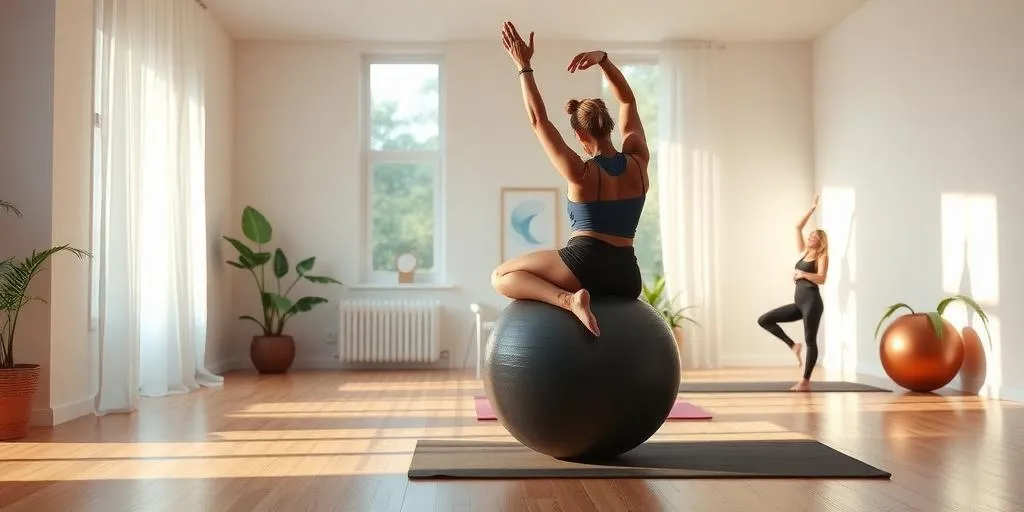
To get started with yoga ball exercises, the first step is to choose the right size ball. When you sit on the ball, your knees should be at a right angle. This ensures comfort and stability during your workouts. Next, make sure you have a safe space to exercise in. Clear away any sharp objects that could cause accidents. Wearing the right footwear is also important; choose shoes with good grip to avoid slipping on the ball.
Before you dive into your exercises, take a moment to warm up your muscles. This helps prevent injuries and prepares your body for movement. As you begin, remember to engage your core muscles. This not only stabilizes your body but also maximizes the effectiveness of each exercise.
Start with simple exercises and gradually increase the difficulty as you gain confidence. It’s essential to stay hydrated, so drink water before, during, and after your workout. Always listen to your body; if you feel pain, it’s a signal to stop and rest. Pushing through pain can lead to injuries, which we want to avoid.
If you’re unsure about your form or how to perform an exercise correctly, consider consulting a fitness trainer. They can provide valuable guidance and ensure you’re doing the exercises safely. Lastly, remember to have fun! Enjoy the process and celebrate your progress, no matter how small.
- Choose the right size ball: The ball should allow your knees to be at a right angle when sitting.
- Ensure a safe space: Clear the area of sharp objects to prevent any accidents.
- Wear proper footwear: Use shoes with good grip to avoid slipping.
- Engage your core: Focus on your core muscles to stabilize your body during exercises.
- Start slow: Begin with simple exercises and gradually increase the difficulty as you gain confidence.
- Warm-up first: Always warm up your muscles before starting your workout to prevent injuries.
- Stay hydrated: Drink water before, during, and after your workout.
- Listen to your body: If you feel pain, stop and rest. Pushing through pain can cause injury.
- Consult a professional: If unsure, seek advice from a fitness trainer to ensure proper form.
- Have fun: Enjoy the process and celebrate your progress, no matter how small.
2. 30-Minute Sit for Core Stability
To start your 30-minute sit, find a comfortable position on your yoga ball with your feet flat on the ground and shoulder-width apart. It’s important to keep your back straight, so be mindful of slouching. Using a timer can help you track your progress; begin with just 10 minutes and gradually aim for a full 30 minutes as you build endurance. To enhance stability and relaxation, incorporate deep breathing into your routine. As you sit, try shifting your weight slightly from side to side to engage different muscle groups. If you feel unsteady, placing your feet on a mat can provide extra stability. You might also consider using a cushion for added comfort during longer sessions. Make this exercise a part of your daily routine by sitting on the ball while watching TV or reading. To further activate your core, introduce gentle movements like small twists. As you get comfortable, gradually increase your sitting time to strengthen your core stability.
| Exercise | Description | Duration |
|---|---|---|
| 30-Minute Sit | Sit on the exercise ball with feet flat on the ground. Engage your core muscles to maintain balance. | Start by sitting for 10 minutes, gradually increasing to 30 minutes. |
| Ball Marching | Sit upright on the Swiss ball with feet flat. Lift one heel off the ground while keeping your toes down. Alternate feet for core engagement. | 10 to 15 minutes. |
| Wall-Assisted Ball Squat | Stand with your back against a wall and the ball behind you. Lower into a squat while keeping the ball pressed against your back. Hold for a few seconds, then return to standing. | A few seconds per hold. |
| Ball Sit-Ups | Sit on the exercise ball with feet flat on the floor. Lean back to a 45° angle, then use your abs to return to sitting. Repeat. | 5 repetitions. |
| Ball Leg Lifts | Sit on the floor with the ball behind your back. Roll back so your shoulders rest on the ball, keeping your feet flat. Lift one leg straight and hold for 10 seconds, then lower. Repeat for each leg. | 5 times on each leg. |
| Hip Bridge | Start with your feet on the ball and back flat on the floor. Push through your heels to lift your buttocks without arching your back. For a challenge, try a single-leg hip bridge. | A few repetitions. |
| Plank | Place your feet on the ball and hands under your shoulders. Keep your body straight from head to heels. Hold this position to strengthen your core. | As long as comfortable. |
| Triceps Hold | Sit with your feet flat and hands on the ball behind you. Push through your hands to lift your hips off the ground. Hold this position for balance training. | A few seconds per hold. |
| Wall Squat Hold | Position the ball against the wall with your back. Lower into a squat as if sitting in a chair. Hold the squat for added strength. | Shorter hold to build endurance. |
| Deadbug | Lie on your back with the ball squeezed between your feet. Lift your legs to a 90-degree angle, alternating sides for balanced coordination. | Multiple sets. |
| Push-Ups | Start with both hands on the ball and feet on the ground. Lower your chest towards the ball and push back up. This variation challenges your upper body and core strength. | 5 to 10 repetitions. |
| Rearfoot Elevated Split Squat | Position one foot on the ball and the other in front. Squat down until your front thigh is parallel to the ground. Push back up to stand. | 8 to 12 repetitions on each leg. |
| Bird Dog | Lie on your stomach with your arms and feet touching the floor. Lift the opposite arm and leg simultaneously, alternating sides for core stability. | 10 to 15 repetitions. |
| Y’s | Lie with your chest on the ball, keeping your feet flat on the floor. Raise both arms to form a Y shape, squeezing your shoulder blades. For an easier version, perform this on your knees. | 10 to 15 repetitions. |
| Leg Lowers | Lie with the ball squeezed between your feet. Keeping your back flat, lift your legs straight up, then lower for lower abdominal strength. | 10 to 15 repetitions. |
3. Engaging Your Core with Ball Marching
To start ball marching, sit tall on the yoga ball with your hips level and your core engaged. This is key for maintaining balance. Begin by lifting one foot off the ground, bringing your knee towards your chest. Then alternate legs in a marching motion, which keeps your core activated as you shift your weight. It’s important to focus on your balance while lifting your feet; this adds an extra challenge and engages your muscles more effectively.
To increase coordination and make the exercise more dynamic, incorporate arm movements. You can swing your arms in opposition to your legs, similar to a traditional march. Keeping your breathing steady is also crucial, so try to inhale and exhale smoothly throughout the exercise.
If you’re unsure about your posture, using a mirror can help you check your alignment. Start with short intervals of marching, perhaps just a couple of minutes, and gradually increase the duration as you feel more comfortable. Adding music can make this exercise more enjoyable and help you maintain a rhythm. Practicing daily will lead to improved core strength and stability, making it a great addition to your beginner yoga ball routine.
4. Mastering the Wall-Assisted Ball Squat
To perform the wall-assisted ball squat, start by positioning the yoga ball at the small of your back against a wall. Stand with your feet shoulder-width apart to maintain balance. As you lower into a squat, make sure to keep your knees behind your toes to protect your joints. Hold this squat for a few seconds, feeling the burn in your thighs and glutes, then push through your heels to return to a standing position. Engaging your core throughout the movement adds stability and support, making the exercise more effective. For comfort, consider using a yoga mat beneath your feet. If you’re new to this exercise, start with a shallow squat and gradually increase the depth as you build strength. To challenge yourself, set a timer and aim to hold the squat longer. Pairing this exercise with deep breathing can enhance your focus, helping you get the most out of your workout.
5. Effective Ball Sit-Ups for Beginners
To perform effective ball sit-ups, begin by finding a comfortable position on the exercise ball. Sit with your feet flat on the floor, ensuring your knees are bent at a 90-degree angle. Slowly lean back until your torso is at a 45-degree angle, keeping your core fully engaged throughout the movement. As you lift your torso back to a sitting position, focus on using your abdominal muscles rather than pulling on your neck. Keep your hands at your temples for support, avoiding any strain on your neck. Start with a few repetitions, such as five, and gradually increase the number as you grow stronger and more comfortable with the exercise. Remember to incorporate a slow and controlled movement, as this will enhance effectiveness. If you find it helpful, consider placing a mat beneath you for extra comfort, and try doing this exercise in front of a mirror to monitor your form. For a well-rounded routine, pair these sit-ups with other core exercises, and don’t forget to cool down with gentle stretches after your set.
6. Strengthening Legs with Ball Leg Lifts
To start the ball leg lifts, position the yoga ball behind your back and roll back until your shoulders rest on it. Keep your feet flat on the floor for stability. Begin by lifting one leg straight up while keeping the other foot grounded. Hold that lifted leg for a count of ten before lowering it back down. Make sure to alternate legs to work both sides evenly. It’s important to engage your core to maintain balance as you lift your leg. You can start with five lifts per leg and gradually increase the repetitions as you get stronger. If you’re looking for an extra challenge, consider holding a light weight in your hands while you perform this exercise. Focus on slow, controlled movements to avoid straining and ensure effectiveness. After completing your sets, cool down with some gentle stretches targeting your legs and lower back to help with recovery.
7. Building Strength with Hip Bridges
To perform the hip bridge with a yoga ball, start by lying on your back with your feet resting on the ball and your knees bent. Make sure your back is flat against the floor. Then, push through your heels to lift your hips toward the ceiling, creating a straight line from your shoulders to your knees. It’s important to avoid arching your back during this movement, as keeping your back flat will help protect it and engage your core more effectively. Hold this bridge position for a few seconds before lowering your hips back down. As a beginner, start with a few repetitions, gradually increasing as you gain strength. Always engage your glutes and core throughout the lift for the best results. If you’re looking for an added challenge, try lifting one leg while maintaining the bridge position. For comfort, consider using a yoga mat underneath you. This exercise can also be more fun and motivating if you do it with a friend for accountability. Don’t forget to cool down afterward with stretches that focus on your hip flexors and lower back to promote flexibility and reduce tension.
8. Planking with a Yoga Ball for Core Power
Planking with a yoga ball is a fantastic way to build core strength and stability. To start, place your feet on the ball and your hands on the ground, creating a straight line from your head to your heels. It’s crucial to keep your body aligned, so avoid letting your hips sag. Engage your core muscles and hold this position for as long as you feel comfortable. If you’re new to this, begin with shorter holds and gradually increase the duration as you get stronger. Remember to focus on deep, controlled breathing to help you stay relaxed while you hold the position. Using a timer can be a great way to track your progress and push yourself a little more each time. For an added challenge, consider incorporating leg lifts while you’re in the plank position. Make sure to check your form in a mirror to ensure you maintain proper alignment. Performing this exercise on a soft surface, like a mat, can enhance your comfort level. After your workout, take some time to cool down with stretches that target your core and back to help prevent any tightness.
9. Triceps Hold for Upper Body Strength
To perform the Triceps Hold, start by sitting on the floor with your feet flat and your hands resting on the ball behind you. This position sets you up nicely for the next step. Push through your hands to lift your hips off the ground, creating a straight line from your shoulders to your heels. It’s a great way to challenge your triceps while also engaging your core for stability. Hold this position for a few seconds initially, and as you get stronger, gradually increase the duration of your hold. If you’re looking for extra comfort, consider using a yoga mat under your hands. Breathing steadily helps you maintain control, so focus on that while you hold the position. For added motivation, try this exercise with a partner. After your workout, don’t forget to cool down with stretches that target your arms and shoulders, helping to keep your muscles flexible and relaxed.
10. Wall Squat Hold for Lower Body Endurance
To perform the Wall Squat Hold, position the yoga ball against a wall with your back pressed against it. Stand with your feet shoulder-width apart, slightly in front of you. As you lower into a squat, imagine you are sitting in an imaginary chair. Make sure your knees stay behind your toes to protect your joints. While holding this squat position, focus on engaging your leg muscles and maintaining your balance. Start with a hold of about 10 to 15 seconds and gradually work your way up as your endurance improves. For an added challenge, consider holding hand weights in each hand. Using a timer can help you track your progress and motivate yourself to hold longer over time. Pair this exercise with deep breathing to enhance your focus and relaxation. Always check your form to avoid straining your knees, and remember to cool down afterward with stretches for your legs and lower back.
11. Deadbug Exercise for Coordination
The Deadbug exercise is a fantastic way to enhance coordination while engaging your core. To start, lie on your back and squeeze a yoga ball between your feet to activate your lower abdominal muscles. Lift your legs to a 90-degree angle and extend your arms overhead. As you lower one leg and the opposite arm toward the ground, keep your back flat against the floor. This is key to preventing strain and ensuring you’re using proper form. Remember to maintain a steady pace; this will help improve your coordination and core control.
Breathe steadily throughout the movement, exhaling as you lower your limbs. If you’re new to this exercise, consider using a light ball to make it easier. As you get more comfortable, you can increase the challenge by holding the position longer or even adding weights to your arms and legs. Incorporating the Deadbug exercise into your routine can significantly enhance your overall core stability, making it a valuable addition to your yoga ball exercises.
12. Push-Ups on the Ball for a Challenge
Push-ups on the ball are a fantastic way to elevate your workout and engage your core more than traditional push-ups. To get started, place your hands firmly on the ball and keep your feet planted on the ground for stability. It’s important to maintain a straight line from your head to your heels, so remember to keep your body aligned. As you lower your chest towards the ball, draw your elbows close to your body. Then, push back up to the starting position using your chest and arms. Aim for 5 to 10 repetitions, and as you build strength, you can gradually increase the number of reps.
Focus on controlled movements to prevent any injuries while maximizing the effectiveness of the exercise. If you find this variation challenging, feel free to modify it by resting your knees on the ground. Throughout the exercise, engage your core to maintain stability on the ball. For an extra challenge, try alternating lifting one leg while doing the push-up. This not only adds difficulty but also further engages your core and improves your balance.
13. Rearfoot Elevated Split Squat for Leg Power
The Rearfoot Elevated Split Squat is a fantastic exercise for building leg power and strength. To get started, position one foot on the yoga ball behind you while you keep the other foot planted firmly in front. Lower your body until your front thigh is parallel to the ground, ensuring that your knee doesn’t extend past your toes. This movement primarily targets your quads, hamstrings, and glutes, making it a comprehensive leg workout. To return to the starting position, push through your front heel and rise back up. If you’re looking for an extra challenge, try adding a mini jump at the top of the movement. Remember to keep your core engaged throughout the exercise to help maintain your balance. It’s a good idea to perform 8 to 12 repetitions on each leg for balanced strength development. Focus on slow and controlled movements to minimize the risk of injury. If you’re still mastering your balance, you can always use a wall or a sturdy object for support. Incorporate this exercise into your leg day routine for improved power and stability.
14. Bird Dog for Balance and Stability
To perform the Bird Dog exercise, start on your hands and knees, ensuring your back is flat and your core is engaged. This position helps you maintain balance and stability. Now, simultaneously lift your right arm and left leg, extending them straight out. Hold this position for a second or two, then gently lower back to the starting position. Next, switch sides by lifting your left arm and right leg. This alternating movement is excellent for balanced training. Remember to keep your movements slow and controlled, as this enhances stability. Focusing on a spot in front of you can help maintain your balance throughout the exercise. Aim for 10 to 15 repetitions on each side to ensure a complete workout. It’s important to avoid arching your back; keep it straight during the movements. If you find this challenging, you can modify the exercise by keeping your knees on the ground. Incorporating Bird Dog into your routine can significantly improve your core strength and coordination.
15. Y’s to Enhance Shoulder Strength
To perform the Y’s exercise for shoulder strength, start by lying with your chest on the yoga ball, keeping your feet flat on the floor for stability. Let your arms hang down towards the floor, then lift them up to form a Y shape with your body. As you lift your arms, remember to squeeze your shoulder blades together; this helps activate the muscles in your upper back. Hold this position for a few seconds, then lower your arms back down. Aim for 10 to 15 repetitions to effectively build shoulder strength and stability. If you find it challenging, adjust your foot position for more or less stability. Engaging your core during this exercise is crucial for maintaining balance. As you progress, you can add light weights to your hands for extra resistance. If you prefer a simpler variation, try doing this exercise on your knees instead of lying on the ball. Incorporating Y’s into your upper body routine will significantly enhance your shoulder strength.
16. Leg Lowers for Lower Abdominals
To perform leg lowers effectively, start by lying on your back with the yoga ball squeezed between your feet. This added resistance will help engage your lower abdominal muscles right from the beginning. Lift your legs straight up so they form a 90-degree angle with your torso. This position is key for activating your core. Now, slowly lower your legs toward the floor, making sure to keep your back flat against the ground. It’s important to avoid arching your back during this motion as it can cause strain. Aim to return to the starting position without letting the ball drop, which will challenge your control and stability. A good target is to complete 10 to 15 repetitions. For an added challenge, consider incorporating a slight pause at the bottom of the movement before returning to the start. If you find it difficult to keep your legs straight, you can modify the exercise by bending your knees. This exercise is fantastic for building core strength and stability, making it a great addition to your routine.
Frequently Asked Questions
What are the benefits of using a yoga ball for beginners?
Using a yoga ball can help improve your balance and core strength. It also makes workouts more fun and engaging, and it can be a good tool for beginners to learn proper posture.
How do I choose the right size yoga ball for my height?
To choose the right size ball, sit on it with your feet flat on the ground. Your knees should be at a 90-degree angle. Generally, a 55 cm ball is good for people around 5’2″ to 5’8″, while a 65 cm ball suits those who are 5’9″ to 6’2″.
Are there specific exercises I should start with as a beginner?
Absolutely! Beginners can start with simple exercises like wall squats, seated ball bounces, and modified planks. These exercises help build a solid foundation while keeping it easy to follow.
How can I avoid injury while doing yoga ball exercises?
To stay safe, always use a properly inflated ball, and make sure it’s not too slippery. Warm up before starting your workout and listen to your body, if something feels wrong, stop and adjust.
Can I use a yoga ball at my desk instead of a chair?
Yes, using a yoga ball as a chair can help improve your posture and core strength. Just be sure to take breaks and not sit on it for too long, since it still requires balance and stability.
TL;DR This blog post covers beginner-friendly yoga ball exercises to enhance core strength and overall fitness. It includes 16 exercises such as the 30-Minute Sit, Ball Marching, Wall-Assisted Ball Squat, and more, designed to improve stability, strength, and coordination. Each exercise is explained clearly, making it accessible for newcomers to incorporate into their routine.