Elevate Your Yoga Practice: Simple Strategies for Greater Focus and Personal Growth
A consistent yoga practice transforms more than flexibility; it cultivates resilience, focus, and inner peace.
Yet, many practitioners stall without a clear roadmap.
This article distills essential strategies for sustainable growth, from establishing foundational intentions and mastering breathwork to building strength and deepening mindfulness.
Discover how to navigate plateaus, integrate principles into daily life, and track meaningful progress to keep your journey vibrant and rewarding.

- Yoga Blocks are essential tools for yoga practitioners of all levels to improve the difficulty and stretching strength of various parts of the body. They help adjust posture, assisting the body in achieving certain movements with more precision and ease
- Made from EVA rubber products, these yoga blocks are water-resistant, featuring a closed cell structure that makes non-water absorption and excellent moisture resistance
- This yoga bricks is designed for convenience, being lightweight and compact, making it suitable for carrying to various occasions such as lounges, outdoor activities, home yoga, and stretching exercises
- The surface of these yoga blocks is smooth and non-porous, repelling dirt and dust. Should any dirt accumulate, it can be easily removed with a damp towel, saving you the hassle of thorough cleaning
- They possess good shock resistance and cushioning performance, providing a stable and comfortable foundation for your yoga practice
Last update on 2026-10-19 / Affiliate links / Images from Amazon Product Advertising API
Foundations of a Consistent Practice
Research from the American Psychological Association shows that habit formation takes an average of 66 days, so setting a clear intention, such as ‘I will practice 20 minutes each morning,’ can help anchor your consistency from day one.
A steady yoga practice is not about perfection; it is about showing up for yourself again and again.
Building this foundation requires two key ingredients: a clear sense of purpose and a physical space that supports your routine.
When your environment and your intentions align, the daily decision to unroll your mat becomes significantly easier.
Below, we explore how to set meaningful goals that stick and how to craft a home sanctuary that invites you to breathe, move, and reconnect.
These two pillars work together to transform a sporadic hobby into a sustainable lifestyle.
Setting Intentions and Goals
Instead of vague goals like ‘get flexible,’ use the SMART framework: specific (e.g., ‘touch my toes in forward fold’), measurable (assess weekly with a yoga journal), achievable, relevant, and time-bound (e.g., ‘within 3 months’).
This structure turns an abstract wish into a concrete action plan you can follow.
Start by defining your ‘why.’ Ask yourself whether you are seeking stress reduction, core strength, or improved posture.
Your reason will fuel your motivation on days when you feel tired or distracted.
Next, write a sankalpa, a positive intention that reflects your deeper aspiration. For example, you might say, ‘I am grounded and calm,’ or ‘I move with ease and strength.’
Repeat this phrase silently during your practice, especially during challenging asanas like warrior pose or side plank.
Track your progress weekly in a dedicated space. Use a physical yoga journal, like Yoga Journal, or a digital app, such as Down Dog, to log your sessions, energy levels, and flexibility gains.
Break your main goal into small milestones, like holding a plank for 30 seconds this week, then 45 seconds next week, to maintain momentum and celebrate small wins.
Creating a Sacred Space
Designate a corner of your home with a non-slip yoga mat (e.g., Liforme, $120), two yoga blocks (e.g., Manduka, $20 each), and a strap (e.g., Gaiam, $10) to support your practice.
These props are essential for maintaining proper alignment and safely deepening your stretches.
Follow this simple checklist to build your sanctuary:
- Choose a spot with enough room to extend your arms and legs fully in all directions.
- Use soft, warm lighting or natural light to create a calming atmosphere.
- Keep the area free from clutter, phones, and other distractions.
- Place a small shelf or basket for your yoga journal, a candle, or a plant.
- Consider a mirror to check your posture and body alignment during poses.
Experts recommend that environmental cues play a powerful role in habit formation. When you consistently practice in the same spot, your brain begins to associate that space with relaxation and mindfulness.
Over time, simply entering that corner can trigger a calm response in your nervous system, making it easier to transition into your practice.
Keep your mat unrolled and your props visible. This small act removes friction and serves as a daily invitation to step onto your mat, even for a brief pranayama session or a few sun salutations.
Mastering Breath and Movement
In vinyasa yoga, the breath leads the movement; each inhale and exhale corresponds to a specific transition, so mastering ujjayi breath can increase your focus and reduce stress by activating the parasympathetic nervous system.
This ancient technique creates a rhythmic link between your mind and body, turning your practice into a moving meditation.
Physiologically, ujjayi breath stimulates the vagus nerve, which helps regulate your heart rate and lowers cortisol levels.
The gentle constriction in your throat produces a soft, ocean-like sound that acts as an auditory anchor, keeping your attention in the present moment.
When you synchronize breath with asana, you naturally improve your body awareness and muscle engagement. Each inhale creates space and lift, while each exhale allows for deeper folding and release.
This coordination prevents rushed transitions and encourages a steady, sustainable tempo throughout your flow.
The following techniques will help you refine your breathwork and apply it directly to common vinyasa sequences.
Start with the foundational pranayama practices below, then move on to linking breath with specific postures.
Pranayama Techniques for Focus
Try Nadi Shodhana (alternate nostril breathing) for 5 minutes before practice; a 2017 study in the International Journal of Yoga found that it significantly reduces anxiety and improves attention.
This technique balances the brain’s left and right hemispheres, promoting mental clarity before you step onto your mat.
To practice Nadi Shodhana, sit comfortably with your spine tall. Use your right thumb to close your right nostril, inhale slowly through the left nostril, then close the left nostril with your ring finger and exhale through the right. Continue alternating for 5 to 10 rounds, keeping each breath smooth and even.
Ujjayi breath is your go-to during active asana practice. Constrict the back of your throat slightly, breathing in and out through your nose with a soft hissing sound.
Use this technique throughout your entire vinyasa flow to maintain mental focus and steady energy. For beginners, practice ujjayi in a seated position first before adding movement.
Bhramari (humming bee breath) is excellent for calming the mind after a vigorous sequence. Inhale deeply, then exhale with a gentle humming sound, feeling the vibration in your chest and skull. Repeat for 5 to 10 breaths.
Use it during restorative yoga or before savasana to activate the vagal tone and promote the relaxation response.
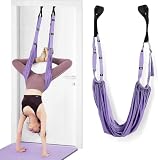
- Multi-Use Yoga Stretching Rope: Perfect for backbends, splits (horizontal/vertical), inversions, or dance warm-ups. This stretching strap helps improve flexibility and alignment safely, ideal for yoga lovers or fitness enthusiasts.
- No-Door-Drill Yoga Strap: Hangs over any standard door with adjustable loops. Close the door to secure – no tools or wall damage. Adjust the height for backbends or leg stretches in seconds.
- 40mm Wide Yoga Stretching Rope: Soft yet strong 40mm nylon webbing supports 400+ lbs. Gentle on skin during splits or hip-opening poses, with reinforced stitching for long-term use.
- Durable & Breathable Yoga Strap: Made with tear-resistant nylon fabric, this yoga strap stays cool and comfortable. Foldable design fits into bags for travel or gym sessions.
- Easy to Clean & Portable: Wipe spills with a damp cloth or hand-wash. Lightweight (1.2lbs) with a storage pouch – practice anywhere, from home studios to outdoor spaces.
Last update on 2026-10-19 / Affiliate links / Images from Amazon Product Advertising API
Linking Breath with Asanas
In a typical sun salutation, each movement is synchronized: inhale to lift arms (Urdhva Hastasana), exhale to forward fold (Uttanasana), inhale to lengthen spine, exhale to step back to plank, and so on.
This breath-led approach transforms a simple sequence into a fluid, meditative experience.
Here is a quick reference for common vinyasa transitions:
| Movement | Breath | Posture |
|---|---|---|
| Lift arms overhead | Inhale | Urdhva Hastasana |
| Forward fold | Exhale | Uttanasana |
| Lengthen spine | Inhale | Halfway lift |
| Step or jump back | Exhale | Plank |
| Lower down | Exhale | Chaturanga |
| Upward dog | Inhale | Urdhva Mukha Svanasana |
| Downward dog | Exhale | Adho Mukha Svanasana |
For warrior poses, inhale to step your foot forward and rise into Warrior I, then exhale to square your hips and ground through your feet.
In Warrior II, keep your ujjayi breath steady as you hold the stance, using each inhale to lengthen your spine and each exhale to relax your shoulders away from your ears.
A common mistake is holding your breath in challenging poses like side plank or boat pose. When you hold your breath, your body tenses and your balance suffers.
Instead, take short, steady ujjayi breaths even in difficult positions. This maintains oxygen flow, improves core activation, and keeps your drishti focused.
Breath-led movement also enhances the mind-muscle connection, helping you engage the transverse abdominis and pelvic floor more effectively.
Over time, this coordination builds core strength, stability, and body awareness, making your transitions smoother and reducing your risk of injury.
Building Strength and Flexibility
Building core strength and flexibility requires a progressive approach: a 2019 meta-analysis in the Journal of Bodywork and Movement Therapies found that consistent yoga practice increases flexibility by 35% over 8 weeks, but only if you gradually intensify your sequences.
This balance between stability and mobility is the foundation of a sustainable practice. Strength without flexibility creates rigidity, while flexibility without strength can lead to joint instability.
Both qualities demand consistent, progressive training rather than sporadic effort. Your muscles need time to adapt to new ranges of motion while developing the support to hold those positions safely.
Progressive overload applies to yoga just as it does to weight training, though the resistance comes from your own body weight and gravity.
The key is to challenge yourself without forcing progress. Each week, you should feel slightly more capable in your current poses before attempting deeper expressions.
This approach protects your connective tissue while building the core activation needed for advanced asanas. The following strategies will help you develop both strength and flexibility in harmony.
Progressive Sequencing
Start with foundational poses like plank and boat pose to activate the transverse abdominis, then progress to side plank and forearm plank, and finally to arm balances like crow pose over 4-6 weeks.
This gradual build allows your deep core muscles to develop the endurance necessary for more demanding postures. Begin with 20- to 30-second holds in plank and boat pose during weeks one and two.
During weeks three and four, add side plank, bridge pose, and gentle spinal twists to your rotation. These poses challenge your obliques and glutes while improving spinal mobility.
Draw your navel toward your spine in every pose to maintain core engagement, and gently lift your pelvic floor to create a stable foundation. This internal activation matters more than how deep you can stretch.
By weeks five and six, introduce backbends like camel pose and inversions such as shoulder stand. Increase your range of motion gradually, moving only a few degrees deeper each session.
Use props liberally: place blocks under your hands in forward fold to reduce hamstring strain, or use a strap around your feet in seated forward bends.
Respect your body’s current limits while consistently showing up to expand them.
Balancing Effort and Ease
In yoga, ‘sthira sukham asanam’ means a pose should be steady and comfortable, so in warrior II, aim for 70% effort, leaving 30% for ease to avoid straining your joints.
This ancient principle reminds us that forcing a pose defeats its purpose. Over-efforting creates unnecessary tension that blocks energy flow and increases the risk of injury.
Apply this balance consciously in each asana. In warrior II, engage your legs and core firmly, but keep your shoulders dropping away from your ears.
In downward dog, press your hands into the mat with intention while softening your neck and jaw.
Your face should remain relaxed even when your muscles work hard, a simple cue that indicates you have not crossed into strain.
| Pose | Effort Focus | Ease Focus |
|---|---|---|
| Warrior II | Legs, core | Shoulders, face |
| Downward Dog | Hands, arms | Neck, jaw |
| Triangle Pose | Legs, side body | Neck, breath |
| Tree Pose | Standing leg, core | Face, gaze |
Use a yoga block under your bottom hand in triangle pose to maintain proper alignment without overreaching. Focus your drishti, or gaze, on a steady point to calm your mind and improve balance.
This combination of physical effort and mental focus creates the body awareness that prevents injury while deepening your practice. Let your breath guide the intensity, easing off whenever your inhale becomes strained or your exhale feels forced.
Deepening Mindfulness and Meditation
A 2018 study in Frontiers in Human Neuroscience found that just 8 weeks of mindfulness-based stress reduction (MBSR) can reduce amygdala size, correlating with lower stress levels.
This is powerful evidence that your yoga practice can physically reshape how your brain responds to pressure. The amygdala acts as your brain’s alarm system, and a calmer response there means better overall nervous system regulation.
Integrating meditation into your asana routine does not require hours of extra time. Start with a simple 5-minute sitting practice before you roll out your mat or immediately after your final pose.
Apps like Headspace or Calm offer guided sessions that make this accessible for beginners. You can also use a basic timer and focus solely on the sensation of your breath moving in and out.
During your physical postures, you can deepen focus using drishti, or a focused gaze. When balancing in poses like tree pose or eagle pose, pick a stationary spot on the floor or wall and hold your gaze there.
This steady visual anchor prevents your mind from wandering and directly enhances your concentration and physical stability.
Your meditation practice does not end when you leave the mat. End every session with savasana, or corpse pose, for 5 to 10 minutes.
Use this time to perform a body scan, moving your attention slowly from your toes to the crown of your head.
This dedicated rest period is when your nervous system shifts into a parasympathetic state, allowing deep recovery and stress relief.
To cultivate emotional resilience, try a gratitude or loving-kindness meditation. This practice trains the mind to generate positive emotions on demand, which supports a healthy vagal tone and overall mental well-being.
You can silently repeat phrases like “May I be happy, may I be healthy” and then extend those wishes to others. This simple shift in focus can dramatically change your outlook on daily challenges.
Here is a short meditation script you can use before your next practice. Sit comfortably with your spine tall and your shoulders relaxed. Close your eyes and take three deep breaths through your nose. Now, let your breath return to its natural rhythm.
Notice the cool air entering your nostrils and the warm air leaving. If your mind wanders, gently label it “thinking” and return to the breath.
Stay here for five minutes, feeling the rise and fall of your rib cage.
Consistency matters more than duration. A 5-minute daily meditation is more effective than a 60-minute session once a month.
Pair this with your asana practice to create a feedback loop where physical strength supports mental clarity, and mental clarity enhances your body awareness. Over time, this synergy builds a profound sense of inner stability that carries into every aspect of your life.

- LIGHTWEIGHT & THICK YOGA MAT: These durable, yet lightweight exercise yoga mats are extra thick for the additional cushioning your joints need during any yoga or fitness routine
- STICKY NON-SLIP TEXTURE: Yoga mat features a textured sticky non-slip surface for excellent traction and superior grip and a stylish design to keep you motivated and focused
- NON-TOXIC & 7P FREE – PVC yoga mat is a healthier choice for you and the planet and free of DEHP, DBP, BBP, DINP, DIDP, DnOP, DnHP (Note: For best results unroll and air out your mat for 2-3 days before use – a harmless odor may be present when unwrapped)
- FREE YOGA CLASS: Yoga mat purchase includes a free bonus downloadable yoga workout to help get you started
- DIMENSIONS: 68-Inch x 24-Inch x 6mm Thick

Last update on 2026-10-19 / Affiliate links / Images from Amazon Product Advertising API
Overcoming Common Plateaus
Plateaus are normal: a 2020 survey of 500 yoga practitioners found that 70% hit a strength or flexibility plateau within the first year, often due to repetitive routines and ignoring rest days.
When your progress stalls, it is easy to feel frustrated or doubt your ability. However, a plateau is simply a signal that your body needs a new approach, not a sign of failure.
Hitting a wall in your practice often happens because you repeat the same sequences without variation. Your muscles and nervous system adapt to familiar patterns, so they are no longer challenged.
The key is to listen to your body and make small adjustments rather than pushing harder through the same movements.
Adapting your routine can mean changing the pace, using props, or even taking a rest day. Recovery is where progress happens, and your muscles rebuild during time off. By honoring your body’s needs, you can break through plateaus and continue growing in strength, flexibility, and mindfulness.
The two strategies below will help you tune into your body’s signals and adjust your practice to fit your current life circumstances.
Both approaches keep your yoga practice sustainable and rewarding for the long term.
Listening to Your Body
Use the ‘pain vs. sensation’ rule: a stretching sensation is normal, but sharp pain is a warning sign. If you feel sharp pain in pigeon pose, modify by placing a block under the hip.
Productive discomfort feels like a deep stretch or muscle fatigue, while harmful pain is often sharp, stabbing, or felt in the joints. Learning to tell the difference protects you from injury.
In a forward fold, a hamstring stretch is fine, but lower back pain means you should bend your knees. Similarly, mild burns in your shoulders during chaturanga are expected, but wrist pain is a red flag to lower your knees or use blocks.
Proprioception, your body’s sense of position, helps you notice these signals earlier. You can develop it through slow, mindful practice by scanning your body from head to toe.
| Pose | Red Flag | Safe Adjustment |
|---|---|---|
| Lotus | Knee pain | Sit on a block or cross-legged instead |
| Chaturanga | Wrist pain | Drop to your knees or use a forearm plank |
| Pigeon | Sharp hip pain | Place a block under the hip |
| Shoulder Stand | Neck strain | Skip the pose or use a folded blanket |
Rest days are just as important as active practice. Muscles grow and repair during rest, not during the workout itself.
Skipping rest days leads to overuse injuries and mental burnout, which stall your progress even more. Schedule at least one or two rest days per week to let your body recover and come back stronger.
Adapting to Life Changes
If you have a busy week, shorten your practice to 10 minutes of sun salutations and child’s pose rather than skipping it entirely; consistency beats intensity during life transitions.
Your yoga practice should flex with your schedule, not add more stress. A short daily session keeps your body moving and your mind grounded.
When you sustain an injury, modify your routine using props or switch to yin yoga, which gently targets connective tissue.
Yoga blocks and straps make poses accessible without compromising alignment. For pregnancy, focus on restorative poses like supported bridge with blocks, and avoid deep twists or inversions unless your teacher approves.
| Life Change | Practice Adaptation |
|---|---|
| Busy schedule | 10-minute flow or 5 sun salutations |
| Injury | Use props, switch to yin or restorative yoga |
| Pregnancy | Supported bridge, gentle hip openers, avoid twists |
| High stress | Emphasize pranayama, meditation, and savasana |
For stressful periods, shift your focus from physical intensity to breathwork and meditation. Practices like ujjayi breath and alternate-nostril breathing calm the nervous system and reduce cortisol levels.
A yoga journal helps you track how your practice evolves, noting what feels good and what needs adjustment.
Consult a teacher for personalized guidance when you face major life changes. A skilled instructor can offer modifications you might not consider and help you maintain alignment safely.
Your practice is a lifelong companion, and adapting it to your circumstances keeps it relevant and supportive.
Integrating Yoga Beyond the Mat
Yoga philosophy (from the Yoga Sutras) teaches that the ultimate goal is to quiet the mind and connect with your true self, so apply mindfulness to daily activities like eating, walking, and breathing.
Your time on the mat is practice for the other 23 hours of your day. The body awareness you build in asana translates directly into how you respond to stress, cravings, and emotional triggers off the mat.
Start with mindful eating as a simple entry point. Chew slowly, put your fork down between bites, and actually savor the flavors and textures of your food.
Express gratitude before meals, even if it is just a silent acknowledgment of the nourishment before you. This single practice slows down your nervous system and improves digestion, turning a rushed meal into a mini meditation.
When stress spikes at work, use ujjayi breath to anchor yourself. Take a few oceanic breaths by constricting the back of your throat and breathing through your nose.
This pranayama technique activates the relaxation response and regulates your nervous system, giving you a pause before you react. You can do this at your desk, in a meeting, or while stuck in traffic without anyone noticing.
End your day with a gratitude journal to close the loop on your daily practice. List three specific things you are grateful for, and pair that with self-compassion by speaking kindly to yourself after a challenging day.
This shifts your mental focus away from what went wrong and toward the flow of energy, which experts suggest helps keep prana moving freely through your body and prevents energetic blockages in your chakras.
Consider this simple daily routine to weave yoga into every hour. In the morning, set a sankalpa or intention before you get out of bed. At midday, take a three-minute breathwork break to reset your focus.
In the evening, return to your journal and reflect on how your mindfulness held up during the day. This structure builds consistency without requiring extra time on the mat.
Remember that patience is part of the practice. You will forget to breathe mindfully and occasionally rush a meal.
That is normal.
The goal is not perfection; it is progress tracking through self-observation. Each time you notice yourself drifting, you have already returned to the present moment, which is the very essence of yoga.

- Crafted from skin-friendly,soft and moisture-wicking fabric at 0.61-0.64mm thickness, our yoga pants provide luxurious comfort and flexibility for yoga and daily wear. *Note: Fabric may attract dust due to static. To keep clean, use a lint roller for a quick refresh.
- Designed with a high waist and streamlined hips, these loose pants beautifully contour your curves, offering a flattering fit for all body types
- Featuring 2 front functional pockets for convenient storage, 2 decorative back pockets and faux fly giving you a business dressy and classic look
- Our wide leg pants effortlessly transition from elegant when paired with pumps to casual or when styled with athletic shoes, making them versatile for any occasion
- These comfy pants are perfect for yoga, casual wear, office attire, or simply lounging at home. Elevate Your Performance with Us!
Last update on 2026-10-19 / Affiliate links / Images from Amazon Product Advertising API
Tracking Your Progress
Use the ‘Yoga with Adriene’ progress tracker or a simple spreadsheet to log your daily practice, noting poses you mastered (e.g., ‘held crow pose for 5 seconds’) and how you felt. The key is consistency, not perfection.
Choose a method that feels natural, whether that is a paper journal, a dedicated app like Down Dog, or a basic digital grid.
Your chosen method should be easy to access and quick to update. A yoga journal offers space for reflection, while an app can automate reminders and track streaks.
A spreadsheet works well if you prefer sorting data and viewing trends over months.
Each day, record the essentials: the date, total duration, specific asanas practiced, your energy level, and your mood.
Add a short note on breathwork or pranayama if you incorporated it. This simple log builds a rich picture of your yoga practice over time, revealing patterns you might otherwise miss.
For example, you might notice your energy is higher in the morning, making vinyasa flow more enjoyable.
Or you may notice that your mood consistently improves after a restorative yin session. These insights help you tailor your routine to what serves you best.
Set a monthly checkpoint to evaluate your progress with concrete measurements. Try tracking the distance from your fingertips to the floor in a forward fold, or the duration you can hold a plank or chair pose.
These objective markers show improvement even when daily changes feel invisible.
Celebrate small wins along the way, like holding a side plank for 30 seconds or finally touching your toes.
Progress in yoga is rarely linear. Some weeks you will feel strong, and other weeks, flexibility or balance may regress. That is normal and part of the journey.
Tracking offers psychological benefits beyond physical gains. Reviewing your journal can boost motivation on days when you feel stuck.
It also builds self-compassion by helping you see how far you have come rather than focusing on what remains difficult.
Remember that rest days and recovery are part of progress too. Use your log to notice when your body needs a slower practice or a full break.
Patience is essential, and your tracker is a tool to support that patience, not a judge.
Here is a sample journal entry template to get you started:
| Field | Example Entry |
|---|---|
| Date | October 12 |
| Duration | 30 minutes |
| Poses Practiced | Sun salutation, warrior II, bridge pose, child’s pose |
| Energy Level (1-5) | 4 |
| Mood | Calm but tired |
| Breathwork | Ujjayi breath throughout |
| Notes | Held Warrior II longer than last week. Felt stable in my hips. |
Use this template as a starting point and adapt it to fit your needs.
The act of writing things down reinforces your commitment to the practice.
Over time, you will build a valuable record of your growth, both on and off the mat.
FAQ’s
1. What are yoga practice strategies for growth and focus?
Yoga practice strategies are simple, consistent habits that help you improve physically, mentally, and emotionally while strengthening concentration and self-awareness.
2. How does yoga improve focus?
Yoga improves focus by combining breath control, mindful movement, and stillness. This helps calm mental distractions and train your attention to stay present.
3. How often should I practice yoga to see progress?
A regular practice of 3 to 5 sessions per week can lead to noticeable progress. Even 10 to 20 minutes a day can make a difference when done consistently.
4. What type of yoga is best for mental clarity?
Styles like Hatha, Vinyasa, and Yin Yoga can all support mental clarity. Hatha helps with steady concentration, Vinyasa builds flow and focus, and Yin encourages calm reflection.
5. Can beginners use these yoga practice strategies?
Yes. Beginners can start with basic poses, short sessions, and simple breathing exercises. The key is to build a sustainable routine rather than push too hard too soon.
6. What role does breathing play in yoga for focus?
Breathing helps anchor the mind and regulate stress. Conscious breathing techniques can improve concentration, reduce anxiety, and make your practice more effective.
7. How can I stay consistent with yoga practice?
Set a realistic schedule, create a quiet practice space, and start with manageable goals. Tracking progress and practicing at the same time each day can also help.
8. What are the best yoga poses for focus and balance?
Poses like Tree Pose, Warrior II, Child’s Pose, and Seated Forward Fold can support focus, grounding, and body awareness.
9. Can yoga support personal growth beyond flexibility?
Yes. Yoga supports personal growth by building patience, discipline, emotional balance, resilience, and a stronger mind-body connection.
10. How long should a yoga session be for growth and focus?
A focused session can be as short as 15 minutes or as long as an hour. What matters most is consistency and mindful practice.
11. Is morning or evening yoga better for focus?
Morning yoga can help set a calm, clear tone for the day, while evening yoga can reduce mental clutter and stress. The best time is the one you can maintain consistently.
12. How do I make my yoga practice more mindful?
Move with intention, pay attention to your breath, avoid rushing, and take a few moments of stillness before and after practice. Mindfulness grows when you stay fully present.

4 Comments