Unlock Your Yoga Practice: Yoga Headstand Variations You Can Try
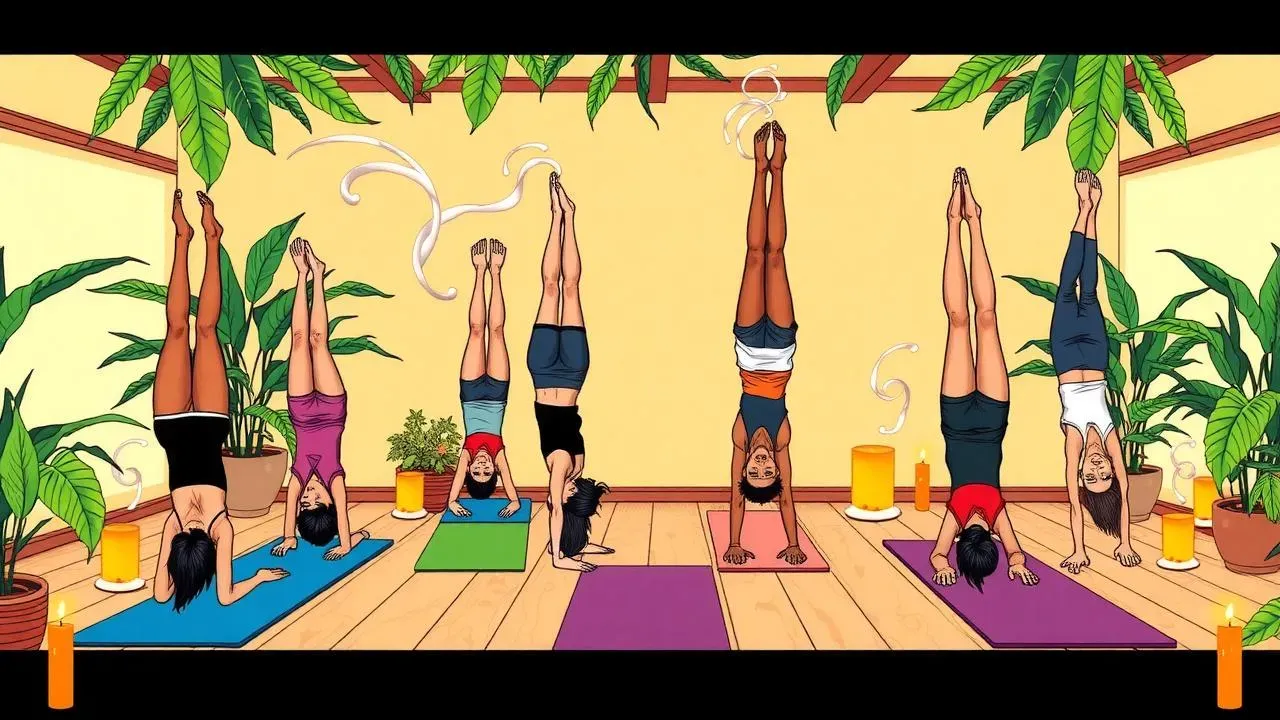
Headstands, or Sirsasana, are fantastic for yogis looking to strengthen their bodies and clear their minds.
This posture not only improves circulation to the brain but also enhances core strength and focus.
If you’re eager to spice up your practice, consider variations like the Forearm Headstand or Tripod Headstand.
These options build arm strength while increasing balance, making them perfect for intermediate practitioners.
Advanced yogis might enjoy the challenge of a Bound Headstand, which offers significant benefits for the neck.
Remember to prioritize safety by using props and building strength first.
With care and patience, headstands can genuinely elevate your yoga journey!
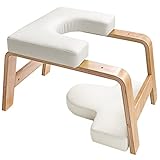
- With Restrial Life Headstand Bench, you can do a headstand to build up strength and mobility with safe and confident. Our yoga bench can assist you into an inversion safely and effortlessly
- Stable & comfortable: wood frame in rounded rectangular shape holds up to 300 lbs; non-slip pads at the bottom give you extra safety assurance on the inversion stool; 2.5-inch cushion relieves pressure on the neck & shoulder when doing a headstand
- Beginner-friendly: the yoga stool is a perfect headstand trainer for beginners: follow the instruction to learn yoga inversion(Shirshasana) in 4 steps; the detachable block can also be used as a yoga brick for other yoga poses
- Multiple benefits: practicing a headstand promotes blood circulation and balance, relieves stress and tension, strengthens the upper body, spine, and core, and even improves sleep & digestion
- Reliable: Restrial Life inversion bench has sold over 10,000 pieces worldwide. If you have any questions about the yoga inversion chair, please feel free to contact us
Last update on 2026-03-23 / Affiliate links / Images from Amazon Product Advertising API
1. What Are Yoga Headstands?
Headstands, known as Sirsasana, are often called the king of asanas in yoga.
This pose involves balancing on your head with your legs raised, creating an upside-down position. It demands strength, balance, and focus, which makes it a challenging yet rewarding posture to master.
Many practitioners find that practicing headstands enhances their body awareness and control.
While typically featured in advanced yoga classes, headstands can be modified to accommodate students of all skill levels.
With roots in ancient yogic traditions, these inversions have been practiced for centuries, often performed toward the end of a session when the body is warmed up.
Headstands not only strengthen the body but also invigorate the mind, enhancing mental clarity.
However, it is crucial to receive proper training and instruction to ensure safety while practicing this powerful pose.
2. Benefits of Practicing Yogic Headstands
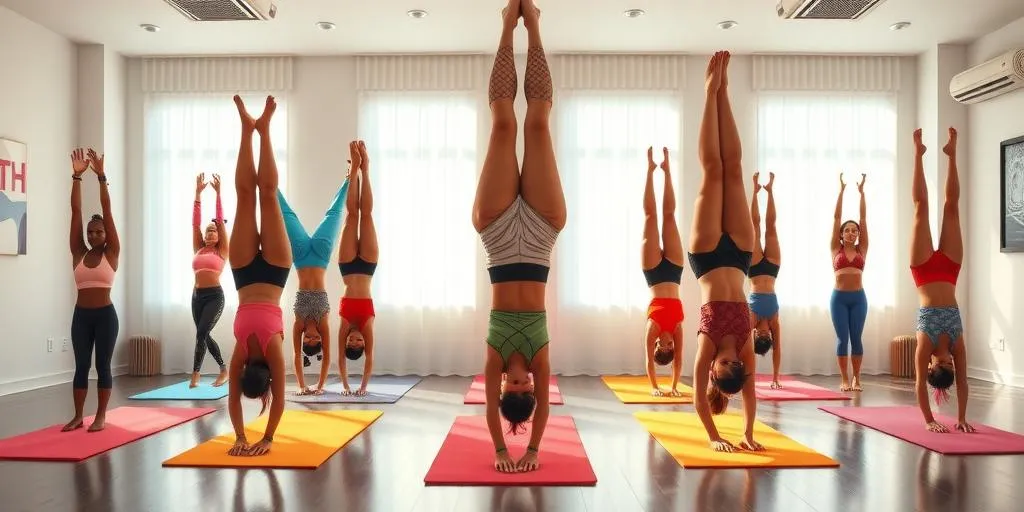
Practicing headstands offers a variety of benefits that can enhance both your physical and mental well-being.
Firstly, they improve blood flow to the brain, which can boost cognitive functions like memory and concentration.
This increased circulation is not just invigorating; it can also help you feel more alert and focused throughout your day.
Additionally, headstands engage your core muscles, which stabilize your spine and improve your posture.
A strong core is essential for maintaining balance, and practicing headstands can help you develop that strength over time.
On a more emotional level, practicing this pose can significantly reduce stress and promote relaxation.
The inversion encourages a shift in perspective, leading to greater mental clarity and a fresh outlook on challenges.
Moreover, headstands stimulate the lymphatic system, aiding in the removal of toxins from the body and boosting your immune system.
Regularly incorporating headstands into your routine can also elevate your overall energy levels and mood, contributing to a more positive outlook on life.
As you master this pose, you’ll notice improved balance and coordination, which are crucial for many other yoga practices.
Additionally, headstands can help alleviate minor digestive issues by promoting circulation in the abdominal area.
Engaging in headstands requires mindfulness, encouraging you to connect deeper with your yoga practice.
Plus, as you build shoulder and arm strength in this pose, you prepare your body for other challenging postures.
Overall, the benefits of headstands are numerous and can significantly enhance your yoga journey.

- With Restrial Life Headstand Bench, you can do a headstand to build up strength and mobility with safe and confident. Our yoga bench can assist you into an inversion safely and effortlessly
- Stable & comfortable: wood frame in rounded rectangular shape holds up to 300 lbs; non-slip pads at the bottom give you extra safety assurance on the inversion stool; 2.5-inch cushion relieves pressure on the neck & shoulder when doing a headstand
- Beginner-friendly: the yoga stool is a perfect headstand trainer for beginners: follow the instruction to learn yoga inversion(Shirshasana) in 4 steps; the detachable block can also be used as a yoga brick for other yoga poses
- Multiple benefits: practicing a headstand promotes blood circulation and balance, relieves stress and tension, strengthens the upper body, spine, and core, and even improves sleep & digestion
- Reliable: Restrial Life inversion bench has sold over 10,000 pieces worldwide. If you have any questions about the yoga inversion chair, please feel free to contact us

Last update on 2026-03-23 / Affiliate links / Images from Amazon Product Advertising API
3. Exploring Popular Yoga Headstand Variations
When it comes to headstands, there are several variations to explore, each offering unique benefits and challenges.
The Forearm Headstand, known as Salamba Sirsasana I, is an excellent starting point for beginners.
This variation is safer as it reduces strain on the neck, making it an excellent choice for those new to inversions.
By forming a triangle with your forearms and keeping the crown of your head supported, you can gradually build strength and confidence.
If you’re looking for something more stable, the Tripod Headstand (Sirsasana II) might be your best bet.
This position creates a solid base using your hands and head, making it accessible for those with wrist strength.
It not only strengthens your shoulders and core but also adds an extra layer of stability as you lift your legs into the full pose.
For advanced practitioners seeking a challenge, the Bound Headstand, or Baddha Hasta Sirsasana, takes your balance and coordination to the next level.
By binding your hands to opposite elbows, you increase the pose’s complexity, requiring greater focus and strength.
This variation can help deepen your understanding of balance while building neck strength.
Each of these variations can serve as stepping stones to mastering the full headstand, allowing you to target different muscle groups along the way.
They also keep your practice fresh and exciting, preventing it from becoming monotonous.
Remember, you can modify each pose to fit your skill level, and incorporating props like yoga blocks can provide extra support as you practice.
By exploring these variations, you’ll not only gain physical strength but also boost your confidence and mental clarity in your yoga journey.
| Variation Name | Level | Steps | Benefits | Cautions |
|---|---|---|---|---|
| Forearm Headstand (Salamba Sirsasana I) | Intermediate | 1. Start kneeling with forearms on the mat, bind hands to opposite elbows. 2. Place the crown of the head on the mat slightly forward of the forearms. 3. Tuck toes, walk feet forward, lifting into the tuck position. 4. Slowly straighten legs into the headstand. | Strengthens arms and shoulders, improves balance, and increases circulation. | Avoid if you have neck injuries, high blood pressure, or migraines. |
| Tripod Headstand (Sirsasana II) | Intermediate | 1. Sit on knees, place hands on the mat shoulder-width apart. 2. Lower head forward of hands, creating a triangular position. 3. Tuck toes, walk feet forward, stacking hips over shoulders. 4. Place knees on triceps, then straighten legs into the headstand. | Strengthens shoulders, arms, and core more intensively than the classic headstand. | Avoid if you have wrist or shoulder instability or are a beginner without foundational skills. |
| Bound Headstand (Baddha Hasta Sirsasana) | Advanced | 1. Start kneeling with forearms on the mat, bind hands to opposite elbows. 2. Place crown of head on the mat slightly forward of forearms. 3. Tuck toes, walk feet forward, lifting into the tuck position. 4. Slowly straighten legs into the headstand. | Enhances neck strength and overall balance. | Avoid if experiencing neck or back injuries, migraines, or high blood pressure. |

- 【PERFECT YOGA HEADSTAND BENCH】Our yoga headstand bench is built for everyone to do the headstand extremely easy and fun without causing too much pressure on the neck, arms, and shoulders; 100% upside down on your first kick up no matter your age or skill level. Enjoy going upside down without worrying about slipping or tipping.
- 【YOUR IDEAL YOGA PARTNER】For its excellent shape and function, the bodyrhythm yoga headstand bench will be a ideal yoga partner for you. It can correct your hunchback, shape your body, train your balance and improve your flexibility. Join the bodyrhythm Family!
- 【VERSATILE YOGA HELPER】The bodyrhythm trainer is not just an inversion tool, it’s a source of inspiration of countless asanas like upward plank, forward and backward bends, shoulderstand, extended triangle pose, plank boat pose, pigeon pose, etc. bodyrhythm Asanas Poster, showing versatile yoga, fitness and relaxation exercises for your daily practice.Try bodyrhythm now and explore more yoga practice.
- 【STURDY AND SAFE CONSTRUCTION】Our yoga chair frame is made from high quality multi layered birch wood, bent from one piece that makes it very stronger and flexible at the same time.; The base has a unique trapezoid expansion design that loads up to 440 pounds and prevents tipping while practicing.
- 【COUNTLESS BENEFITS】The strength training inversion equipment can increase blood circulation, minimize muscular stiffness, Realign the spine, Improve digestion and metabolism, and relax your back; Practicing a yoga stand can strengthen the upper body, Improve posture, and more.
Last update on 2026-03-23 / Affiliate links / Images from Amazon Product Advertising API
4. Additional Yoga Headstand Variations to Try
If you’re looking to explore more headstand variations, there are plenty of options that cater to different skill levels.
The Tripod Dolphin Pose is a fantastic starting point for beginners, allowing you to get comfortable with inversions while building strength and balance.
Once you’re ready to step it up, try the Tripod Egg Headstand.
This playful variation helps you develop control and strength, making the transition to a full headstand smoother and more manageable.
For those seeking an extra challenge, the One-Legged Headstand adds a dynamic element.
Balancing on one leg while maintaining your position tests your core strength and stability.
Similarly, the Inverted Tree Pose offers a unique twist, where one leg is raised, promoting focus and stability as you maintain your balance.
If you’re interested in opening your hips while practicing headstands, the Wide-Legged Headstand is a great choice.
This variation not only improves flexibility but also helps with balance.
Alternatively, practicing a Half-Headstand with one leg raised can be a gentler way to build strength gradually before fully committing to the classic headstand.
Exploring these variations can help you identify which muscles need more attention, whether it’s strength or flexibility.
They serve as excellent entry points for those who might be hesitant to dive into the full pose right away.
Plus, don’t forget that you can adapt each variation with props to ensure a safer experience.
Experimenting with different positions can deepen your understanding of body alignment and mechanics, making your practice even more rewarding.

- The Perfect Yoga Inversion Bench for Handstands – Headstand your way to flexibility, balance, and confidence with FeetUp’s The Original head stand bench! Make Sirasanas that much more fun with a yoga stand that allows you to pose with ease
- Promotes Inversion Safety – Unassisted headstands are the #1 reason for injuries in yoga! Protect your body with an inversion headstand stool that offers durability and body weight resistance. No more wobbly yoga stools!
- Thoughtfully Designed for Yoga Practice – Each yoga bench headstand stool is designed with a shape and function that supports all types headstand poses. Enjoy the benefits of inversions without worrying about risks to your neck and spine.
- FeetUp Wherever You Are – Doing handstands and similar poses at home, at the office, and elsewhere has never been more convenient than with The Original headstand chair. Take your inversion chair yoga tool with you whenever you’re on the move for Sirasanas on the go.
- Made with Earth-Friendly Materials – FeetUp’s headstand inversion bench won’t just benefit you. It’s good for the environment, too. These yoga inversion chairs are composed of sustainable vegan leather and dark or light beech wood.
Last update on 2026-03-23 / Affiliate links / Images from Amazon Product Advertising API
5. Safety Tips for Practicing Headstands
When practicing headstands, safety should always come first.
Start by warming up properly to prepare your body for the demands of this pose.
Focus on strengthening your shoulders, core, and neck muscles before attempting the headstand.
This foundational strength is crucial for maintaining balance and preventing injury.
For beginners, using a wall or props can provide the support needed while learning the posture.
It’s essential to pay attention to your body; if you feel any pain or discomfort, stop immediately.
Proper alignment is key to avoiding unnecessary strain on your neck and spine, so keep your head, neck, and back in a straight line.
If you’re new to headstands, consider practicing under the guidance of a qualified instructor who can offer personalized feedback.
Ensure your practice area is clear of obstacles to minimize the risk of injury during falls.
Start with easier variations before progressing to more advanced poses, and incorporate strength and flexibility training into your routine to support your headstand practice.
Always listen to your intuition and avoid pushing yourself beyond your limits.
- Always warm up properly to prepare your body for the demands of headstands.
- Strengthen your shoulders, core, and neck muscles before attempting the pose.
- Use a wall or props for support, especially when first learning the posture.
- Pay attention to your body and stop if you feel any pain or discomfort.
- Maintain proper alignment to avoid unnecessary strain on the neck and spine.
- Consider practicing under the guidance of a qualified instructor for personalized feedback.
- Ensure your practice area is free of obstacles to prevent falls and injuries.
- Start with easier variations before progressing to more advanced poses.
- Incorporate strength and flexibility training into your yoga routine to support headstand practice.
- Listen to your intuition and avoid pushing yourself beyond your limits.
6. Who Should Avoid Yoga Headstands?
Certain individuals should avoid headstands due to health concerns.
If you have neck, spine, or shoulder issues, this pose could worsen your condition, so it’s best to avoid it.
Those with hypertension should also skip headstands, as the inversion can further elevate blood pressure.
For people with glaucoma or similar eye conditions, practicing headstands can lead to complications that you want to avoid.
Pregnant individuals should definitely refrain from this pose, as it places unnecessary pressure on the abdomen.
Anyone with heart conditions should consult a healthcare provider before attempting headstands, as safety is paramount.
Beginners without proper guidance should hold off on trying headstands to prevent injury.

- Make Inversion Easy and Safe: Unassisted headstands are the leading cause of injuries in yoga! It is essential to protect your body with an inversion stool that offers durability and body weight resistance. Our yoga bench can assist you into an inversion safely and effortlessly without worrying about balance, slipping, or tipping over and the pressure on your neck and spine.
- Countless Benefits of Headstand: Our yoga inversion chair can not only help you decompress your neck and relieve back pain, but also promotes blood circulation, relieves stress and tension, helps improve concentration and balance, relieves fatigue, improves sleep, and helps you lose weight.
- Multifunctional Yoga Bench: Our yoga headstand chair is not just an inversion tool, you can try out a variety of postures in your daily yoga practice like upward plank, forward and backward bends, shoulderstand, extended triangle pose, plank boat pose, pigeon pose, etc.(see the Guide Poster) . In addition, the detachable T-shaped block can be used as a yoga block, and the yoga stool can also be used as a footstool or a shoe-changing stool.
- Stable Construction & comfortable Cushion: Our yoga bench frame is made from quality multi-layered beech wood, bent from one piece that makes it very stronger and flexible at the same time. The cushion is made with faux leather and padded with 2.5-inch thick and high density foam, which can relieve pressure on the neck & shoulder when doing a headstand.
- Easy to Install: The accompanying installation instructions and easy-to-use tools make it possible to quickly assemble the product within a few minutes. Turn the knob at the bottom to remove the T-shaped cushion and unlock different yoga pose. It is a great gift for your friends and loved ones.
Last update on 2026-03-23 / Affiliate links / Images from Amazon Product Advertising API
Frequently Asked Questions
What are some easy yoga headstand variations for beginners?
Beginners can try wall-supported headstands or dolphin headstands. These variations provide support and help build strength in your upper body.
How can headstand variations benefit my yoga practice?
Headstand variations can improve balance, strength, and focus. They also enhance blood circulation and can boost your confidence on the mat.
Are there any safety tips for practicing headstand variations?
Yes, always practice on a stable surface, use a wall for support if needed, and listen to your body. If you feel pain or discomfort, come out of the pose.
What should I do if I struggle to hold a headstand variation?
If you have trouble holding the pose, focus on building core and shoulder strength with preparatory poses. You can also use props, such as blocks or a wall, for extra support.
Can I do yoga headstand variations if I have neck issues?
If you have neck issues, it’s best to avoid headstands altogether. Consult with a healthcare professional or a qualified yoga instructor for safer alternatives.
Headstands, or Sirsasana, are key yoga poses that enhance mental clarity and physical strength.
They offer benefits such as improved circulation, enhanced core strength, and stress relief.
Explore popular variations such as the Forearm Headstand, Tripod Headstand, and Bound Headstand, and try additional options like the One-Legged Headstand.
Safety is crucial, so ensure you build strength and use proper techniques.
However, individuals with neck, back, or heart issues, as well as pregnant people, should avoid them.
Always seek guidance for safe practice.