
Unlock the Power of Yoga: Can It Help You Build Muscle?
Yoga can indeed help you build muscle, primarily through bodyweight exercises that activate muscles with isometric contractions and eccentric movements.
Poses like Plank and Warrior involve holding forms that strengthen various muscle groups.
Research shows yoga can enhance muscular strength after consistent practice, making it effective over time.
Intense styles, like Power Yoga or Ashtanga, introduce metabolic stress that may lead to muscle gain.
While yoga builds functional strength and endurance, for those wanting significant muscle mass, combining it with resistance training is advised to ensure progressive overload.
Ultimately, incorporating yoga enriches your fitness routine by improving strength and flexibility while promoting overall well-being.

- Complete Customizable Yoga Fitness Program For Beginners
- Created With Modifications For The Inflexible
- 4 Anatomy Based Routines For Specific Goals: Strength, Weight Loss, Muscle Recovery, and Stress Relief
- Bonus Yoga Workout For Absolute Beginners Included Inside
- Free Community Of Fellow Users Provide Inspiration, Resources, and Advice
Last update on 2026-04-01 / Affiliate links / Images from Amazon Product Advertising API
Understanding Muscle Building Through Yoga
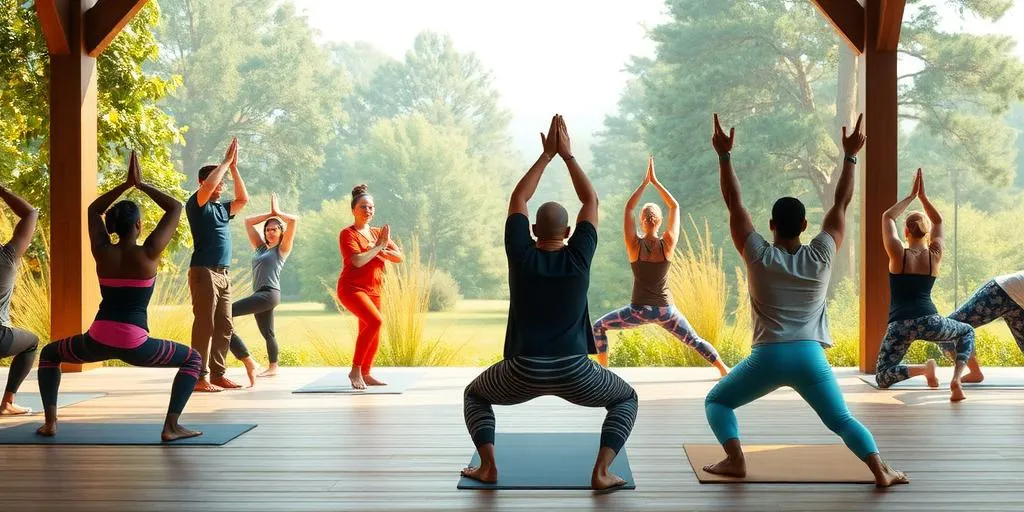
Yoga can truly help you build muscle, primarily through bodyweight exercises that effectively engage your muscles.
When you hold poses like Plank or Warrior, you perform isometric contractions, which strengthen your muscles by maintaining tension.
Additionally, poses like Chair Pose involve eccentric movements, where your muscles lengthen under tension, promoting growth.
Research shows that yoga can improve muscular strength, especially in styles like Power Yoga and Ashtanga that add metabolic stress, which is beneficial for muscle gains.
The key to muscle building in yoga is mechanical stress, signaling your body to repair and strengthen muscle fibers over time.
Practicing yoga enhances body awareness, which helps you engage your muscles more effectively. Breathing techniques used in yoga also improve oxygen delivery to your muscles, supporting their growth.
Regular practice leads to better muscle tone and definition, as well as improved overall strength, coordination, and flexibility. This flexibility is essential as it can help prevent injuries during strength training.
While yoga builds functional strength, it typically may not lead to the same muscle mass or bulk as traditional weight lifting.
That’s why combining yoga with resistance training is recommended for optimal muscle gains, enabling progressive overload —an essential element of muscle growth.
Incorporating yoga poses such as Chair Pose, High Lunge, Warrior II, Plank, and Chaturanga can specifically target various muscle groups and promote strength development.
Overall, while the visible muscle gains from yoga may not be as pronounced as those from weightlifting, yoga still plays a valuable role in enhancing strength, flexibility, and overall fitness.
- Yoga builds muscle primarily through bodyweight exercises.
- Isometric contractions engage muscles by holding poses, increasing strength.
- Eccentric movements involve lengthening muscles under tension, which aids growth.
- Muscle building in yoga relies on mechanical stress, signaling the body to repair muscles.
- Yoga encourages overall body awareness, which can enhance muscle engagement.
- Breathing techniques in yoga can improve oxygen delivery to muscles, aiding growth.
- Regular practice can improve muscle tone and definition.
- Yoga promotes balance and coordination, thereby enhancing overall strength.
- Flexibility gained from yoga can prevent injuries during strength training.

- PILATES EQUIPMENT GUIDE: Maximize your Pilates workout with our Mat and Ball Guide. This useful exercise guide features 132 pages with 22 exercises, full-color pictures, and step-by-step instructions so you can get the most from your floor workout. Mat and Ball sold separately.
- PILATES TRAINING MANUAL: This dedicated guidebook will help you master the details of your Balanced Body Pilates equipment. It provides clear instructions on proper usage so you can safely harness the full potential of your mat and ball.
- EASY-TO-USE FITNESS BOOK: Use this guidebook to tailor your Pilates experience to your individual fitness level. It accommodates both beginners and advanced practitioners to help you create personalized and progressively challenging workouts.
- EXERCISE EQUIPMENT MANUAL: With this guidebook, you can experience an exclusive exploration of Pilates movement principles specifically adapted to your equipment. It goes beyond basic instruction to help you easily integrate the principles into your routine.
- BALANCED BODY: Balanced Body is dedicated to providing Pilates-based education and equipment that empowers users to be mindful of movement, make healthy lifestyle changes, and ultimately find balance.
Last update on 2026-04-01 / Affiliate links / Images from Amazon Product Advertising API
The Role of Isometric Contractions in Yoga
Isometric contractions are a key element in yoga, occurring when muscles contract without changing their length. This can be seen in poses like Plank, where you engage multiple muscle groups simultaneously.
Holding these poses not only helps build stability and core strength but also enhances muscular endurance over time.
For beginners who may not yet feel comfortable lifting heavy weights, isometric exercises offer a perfect way to start building strength.
The longer you hold a pose, the more you engage your muscles, leading to greater fatigue and ultimately, stronger muscles.
One of the fantastic things about isometric contractions is their accessibility; you can perform them anywhere, making yoga a practical choice for muscle engagement.
Additionally, these contractions can improve posture by strengthening the stabilizing muscles that support your spine.
Integrating isometric exercises into traditional workouts can also add variety and keep your routine fresh.
With regular practice of isometric poses, you may notice a remarkable increase in muscle definition, proving that yoga can indeed play a significant role in muscle building.
Eccentric Movements and Muscle Growth
Eccentric movements are a crucial component of muscle growth, occurring when muscles lengthen under tension. In yoga, poses like Chair Pose exemplify this by creating eccentric contractions in the quadriceps.
Research suggests that eccentric training can lead to greater muscle hypertrophy compared to concentric movements alone.
This type of movement plays a significant role in enhancing overall muscle strength.
When practicing yoga, slow transitions between poses further emphasize the eccentric phase of movement, which can be particularly beneficial.
Research Findings on Yoga and Muscle Strength
Studies indicate that yoga can indeed improve muscle strength over time. Research shows that participants can experience significant strength gains after a 12-week yoga regimen, making it a viable option for those looking to build muscle.
For beginners, yoga can be as effective as light weight training, offering a gentle introduction to strength-building exercises.
Regular practice not only enhances overall body strength and tone but also improves muscle coordination, which can lead to better strength outcomes.
Different styles of yoga yield varying benefits; for example, intense styles like Power Yoga and Ashtanga can increase metabolic stress, which can contribute to muscle gains.
Additionally, many yoga practitioners report increased muscle endurance alongside improvements in strength.
Intense Yoga Styles for Muscle Gains
If you’re looking to gain muscle through yoga, consider diving into intense styles like Power Yoga and Ashtanga.
These forms of yoga are not just about flow and flexibility; they pack a punch with their dynamic movements and strength-focused sequences.
For instance, during a Power Yoga session, you might find yourself moving through sequences that challenge your muscles, creating metabolic stress that promotes muscle growth.
Engaging in these high-intensity practices not only builds muscle but also boosts your cardiovascular fitness.
You’ll be tackling more demanding poses that engage larger muscle groups, like Plank or Warrior II, which add to your overall strength.
Many participants notice increased stamina and muscle endurance as they continue with these intense styles.
Breath control is another vital aspect of intense yoga that can enhance your performance.
Adjusting the intensity to fit your fitness level ensures that everyone can benefit from these muscle-building practices.
Over time, regular sessions can lead to visible muscle definition and tone, making intense yoga a valuable supplement to traditional strength training.
The Process of Muscle Building in Yoga
Muscle building in yoga starts with creating mechanical stress on your muscle fibers.
When you hold poses, like Plank or Chair Pose, you create tension that signals your body to strengthen those muscles.
This process is essential because it leads to muscle repair and growth, which primarily happens during your rest periods.
Consistency in your practice is crucial; the more regularly you practice, the more your muscles adapt and grow stronger.
Yoga also enhances your mind-muscle connection, allowing you to engage your muscles more effectively during each pose. Different yoga poses target various muscle groups, promoting balanced development.
For instance, Warrior II strengthens your legs, while High Lunge engages your glutes and core.
However, remember that muscle growth is a gradual process; it takes patience and dedication.
Nutrition plays a vital role, too, as proper fueling supports muscle repair and growth alongside your yoga practice.
Integrating strength training with yoga can further enhance your results.
This combination allows for progressive overload, which is essential for muscle growth.
While yoga can certainly build functional strength, those looking for significant muscle mass may need to incorporate traditional weightlifting into their regimen.
Yoga can still be an excellent form of cross-training, improving your mobility and helping to prevent injuries.
![Baron Baptiste Core Power Live!: Power Vinyasa Yoga for Beginners and All Levels [DVD]](https://m.media-amazon.com/images/I/51h7dSVhz0L._SL160_.jpg)
- STILL SEALED
- Old-Stock
- Dolby Digital,
- Region 0
Last update on 2026-04-01 / Affiliate links / Images from Amazon Product Advertising API
Benefits of Yoga for Muscular Endurance
Yoga can significantly enhance muscular endurance through various mechanisms.
One key way is to incorporate sustained holds and repetitions across different poses, which increases the time under tension for muscles.
For instance, when you hold poses like Plank or Warrior, your muscles constantly work to maintain stability, thereby building endurance over time.
Additionally, as you practice yoga regularly, you may notice improved flexibility, which can contribute to better overall performance during workouts.
With enhanced flexibility, your body can move more efficiently, allowing for longer durations of physical activity without fatigue.
Moreover, yoga emphasizes efficient breathing techniques that support sustained exercise by ensuring your muscles receive adequate oxygen.
This combination of factors leads to a remarkable improvement in muscular endurance that can carry over to other physical activities, making yoga a great complement to any fitness regimen.
Athletes, in particular, may find that the endurance gained from yoga helps them perform better in their respective sports, allowing them to delay fatigue and push through longer workouts.
Holding poses for extended periods builds stamina in targeted muscle groups, thereby significantly enhancing overall athletic performance.
Furthermore, the increased body awareness developed through yoga can optimize movement efficiency, translating to better performance in all physical activities.
Combining Yoga with Resistance Training
Combining yoga with resistance training can really enhance your overall fitness.
Yoga improves flexibility and range of motion, which is super beneficial when you’re lifting weights. While resistance training focuses on building muscle mass, yoga helps tone and stabilize your muscles.
This balance can actually prevent injuries by promoting even muscle development.
You can also use yoga sessions as active recovery between your resistance workouts, allowing your body to recover while still staying active.
Plus, incorporating yoga can boost your focus and mindfulness during strength training, making your workouts even more effective.
Different training styles complement each other, resulting in optimal outcomes.
For example, yoga significantly improves core strength, which is crucial for lifting weights safely.
Cross-training with yoga not only prevents workout plateaus but also keeps your routines fresh and exciting.
Regularly alternating between yoga and resistance training can yield better results in muscle growth, making it a brilliant addition to your fitness regimen.
The Best Yoga Poses for Muscle Building

When it comes to building muscle through yoga, certain poses stand out for their effectiveness. Chair Pose (Utkatasana) is an excellent way to strengthen the legs, glutes, and core.
As you hold this pose, your muscles engage in an isometric contraction, making them work hard.
The High Lunge is another excellent choice, targeting the lower body and strengthening the legs and glutes.
Warrior II Pose (Virabhadrasana II) not only develops leg strength but also enhances stability, essential for overall muscle control.
Then there’s the Plank Pose, which activates the core, shoulders, and arms, giving you balanced strength throughout your body. The Chaturanga is excellent for upper-body strength, particularly the triceps and chest.
For those looking to boost their arm strength and balance, Crow Pose is a must-try, as it engages both the core and upper body.
The Bridge Pose works wonders for your back, glutes, and hamstrings, while Boat Pose hones your core and hip flexors, building stability.
Lastly, Downward Dog serves as a full-body stretch that also strengthens various muscle groups, thereby improving overall muscle control.
Incorporating these poses into your regular practice can lead to noticeable muscle gains, making yoga a powerful tool for muscle building.
| Yoga Pose | Muscle Groups Engaged | Benefits |
|---|---|---|
| Chair Pose (Utkatasana) | Quads, glutes, back, shoulders, arms | Strengthens lower body, core stability |
| High Lunge | Legs, glutes, back, shoulders | Develops strength in the lower body |
| Warrior II Pose (Virabhadrasana II) | Legs | Builds leg strength and stability |
| Plank Pose | Shoulders, back, abs, glutes, quads | Engages core and upper body for balanced strength |
| Chaturanga | Triceps, upper body | Focuses on upper body strength and control |
| Crow Pose | Arms, core | Enhances arm strength and balance |
| Bridge Pose | Back, glutes, hamstrings | Strengthens the posterior chain and opens the hips |
| Boat Pose | Core, hip flexors | Targets core stability and strength |
| Downward Dog | Full body | Stretches and strengthens, improving muscle control |
| Integrating poses | Various | Facilitates noticeable muscle gains over time |
Yoga for Functional Strength vs. Traditional Weightlifting
Yoga and traditional weightlifting both offer unique benefits for strength training, but they approach muscle development differently. Yoga emphasizes functional strength, focusing on improving everyday movement patterns.
This means it helps you build strength that translates to real-life activities, enhancing your balance and coordination, skills essential for overall fitness.
On the other hand, traditional weightlifting primarily targets specific muscle groups to promote hypertrophy, or muscle growth.
While weightlifting can lead to increased muscle mass and strength, it often comes at the expense of flexibility, a key component of yoga.
Yoga poses allow for a full range of motion, which can actually enhance your lifting techniques.
For instance, practicing poses like Downward Dog or Warrior II can improve your flexibility and stability, making you a more effective lifter.
Moreover, the functional strength gained from yoga can reduce the risk of injury during weightlifting, as it promotes better body awareness and control during exercise execution.
In fact, integrating both yoga and weightlifting can create a well-rounded fitness regimen.
Yoga can improve your recovery and mobility, making it a great complement to your traditional strength training.
For those looking to maximize their muscle gains, combining these two practices is a smart move.
You get the benefits of increased muscle tone and strength from yoga, while also achieving the muscle mass associated with weightlifting.
Ultimately, practicing both can lead to a more balanced and practical approach to fitness.
![Yoga Fusion Fix: 3 Time Saving, Targeted Practices For Strength, Balance, Flexibility + Stress Relief [DVD]](https://m.media-amazon.com/images/I/41MP94eJUEL._SL160_.jpg)
Last update on 2026-04-01 / Affiliate links / Images from Amazon Product Advertising API
Yoga’s Effectiveness Compared to Light Weight Training
Yoga can be surprisingly effective in building muscle, especially for beginners. It uses bodyweight exercises that engage muscles through isometric contractions and eccentric movements, making it a great starting point for those new to fitness.
For instance, poses like Plank and Warrior activate multiple muscle groups, leading to improvements in strength.
A 12-week study showed that participants experienced notable gains in muscular strength, further supporting yoga’s potential for muscle growth.
Intense styles like Power Yoga and Ashtanga ramp up the metabolic stress on your muscles, often yielding results comparable to light weight training.
This is particularly beneficial for those who may not yet be comfortable with heavier weights.
While yoga promotes functional strength and improves endurance, flexibility, and coordination, it usually doesn’t lead to the same bulk as traditional weightlifting, which focuses on hypertrophy.
For those aiming for visible muscle gains, combining yoga with resistance training is ideal. This combination allows for progressive overload, which is essential for muscle growth.
So, while yoga can definitely help in building a solid foundation of strength, pairing it with traditional weightlifting will likely yield the best results for significant muscle development.
Visible Muscle Gains from Yoga: What to Expect
Visible muscle gains from yoga may not be as apparent as what you might see from traditional weight training, but they can still be quite significant, especially for beginners.
With consistent practice, yoga enhances muscle tone and definition, leading to a leaner physique over time.
Poses like Chair Pose and Plank are particularly effective for strengthening and toning key muscle groups, contributing to noticeable changes.
As you engage in regular yoga practice, you can expect improved muscle endurance, which can enhance your performance in other physical activities.
Yoga also helps develop a stronger core, which is crucial for overall strength and stability, and indirectly supports muscle growth.
The isometric nature of many yoga poses means that your muscles are worked in different ways, leading to unique adaptations that can aid in muscle building.
Flexibility gained through yoga improves your movement mechanics, enhancing your results in other strength-training exercises.
Progressive challenges in yoga can lead to gradual muscle development, making it a sustainable option for long-term fitness.
With patience and dedication, you can see improvements in muscle tone and strength, even if the gains are subtle at first.
Consistency in practice, combined with proper nutrition, plays a significant role in achieving visible results from yoga.
Incorporating Yoga into Your Fitness Routine
Adding yoga to your fitness routine can really enhance your overall performance.
Not only does it improve flexibility and balance, but it also aids in recovery, making it a fantastic complement to strength training.
You can use yoga sessions as a warm-up or cool-down, which helps prevent injuries and boosts your performance in other workouts.
When choosing a yoga style, consider what aligns best with your fitness goals. If you’re looking for something restorative, gentle classes might be the way to go.
On the other hand, if you want a more vigorous workout, styles like Vinyasa or Power Yoga can really get your heart rate up.
It’s smart to balance your routine by scheduling yoga classes on days when you’re not lifting heavy weights.
This promotes recovery and muscle repair, allowing your body to heal and grow stronger.
Setting realistic goals for your yoga practice can keep you motivated.
You might aim to master specific poses or improve your flexibility over a few months.
Cross-training with yoga lets you diversify your workouts, keeping things fresh and exciting and helping prevent burnout.
Yoga also offers mindfulness benefits, helping to reduce stress and improve your mental focus during workouts. Incorporating yoga breathing techniques can enhance oxygen flow, which is key to endurance in strength training.
Regular practice helps develop a better mind-body connection, which can significantly improve your performance in other fitness activities.
Consider joining a yoga class or using online resources to ensure you’re using the proper techniques.
This will help you maximize the benefits of your practice and make the most out of your fitness journey.

- ALL INCLUSIVE step by step workout program easy-to-follow daily routines.
- NO GUESS WORK- includes 30 day workout calendar blueprint.
- PREMIUM BEGINNER & SENIOR EXERCISE DVD PACKAGE- 2 DVDs with 7 fun total body workouts +more.
- YOGA POSES POSTER (Stretching guide) to improve your flexibility and functional fitness .
- QUICK START GUIDE to help you every step of the way to reach your fitness goals.
Last update on 2026-04-01 / Affiliate links / Images from Amazon Product Advertising API
Frequently Asked Questions
Can yoga help me build muscle like weightlifting?
Yoga can help build muscle, but it’s different from weightlifting. It focuses on body weight, flexibility, and endurance, which can strengthen muscles, but you might not gain as much size.
How often should I do yoga to see muscle gains?
To see muscle gains with yoga, aim for at least 3 to 4 sessions a week. Mix in styles like power yoga or vinyasa to challenge your muscles.
Which yoga poses are best for muscle building?
Some great yoga poses for muscle building include Warrior poses, Downward Dog, and Plank. These poses engage multiple muscle groups and help strengthen them.
Does yoga improve overall strength or just muscle size?
Yoga improves overall strength, flexibility, and endurance rather than just muscle size. It develops functional strength, which is helpful in daily activities.
Can beginners see muscle gains from yoga?
Yes, beginners can see muscle gains from yoga. Starting with basic poses helps build strength and stability, paving the way for more advanced practice over time.
Yoga can help you gain muscle through bodyweight exercises that use isometric contractions and eccentric movements. Research shows that yoga, especially intense styles like Power Yoga and Ashtanga, can improve muscular strength.
While not as effective for maximizing muscle growth as traditional weightlifting, yoga builds functional strength and muscular endurance.
Combining yoga with resistance training is ideal for progressive overload and optimal gains. Key poses for building muscle include Chair Pose, High Lunge, Warrior II Pose, Plank Pose, and Chaturanga.
Overall, yoga is a beneficial addition to any fitness routine.